New Mexico Refuse and Garbage Hauler Insurance
8:30am - 5:00pm Mon-Fri
Will Reply in 15min*
Over 180+ commercial clients covered
100% customer satisfaction guaranteed
Over 10 years of business insurance experience
Picture one of your rear loaders backing down a narrow Albuquerque alley at 6 a.m. The driver clips a parked SUV, a hydraulic line splits, and fluid runs toward a storm drain. A homeowner's dog was in the yard. Within ten minutes, you're facing an auto claim, a possible pollution cleanup, a damaged truck, and maybe an injured worker who slipped trying to help.
That's one bad morning, and it touches four separate policies. Refuse haulers carry some of the most layered risk in commercial transportation. You run heavy trucks on residential streets, handle material that can contaminate soil and water, and put crews in physically punishing jobs every day.
This guide covers garbage hauler insurance in New Mexico from the ground up: auto liability, pollution coverage, equipment protection,
workers' comp, the contract language cities and commercial clients demand, and the
factors that drive your costs. We'll also cover the 2026 tax changes that are squeezing margins right now, so you can budget with clear eyes.
The High Stakes of New Mexico Waste Management InsuranceC
Refuse hauling isn't ordinary trucking. A long-haul driver spends most of the day on interstates. Your drivers make hundreds of stops, back up constantly, work around pedestrians and kids, and lift containers with heavy hydraulic arms. Every stop is a fresh exposure.
Here's what that means for your business. A single serious injury crash involving a 60,000-pound packer truck can produce a verdict that dwarfs your annual revenue. Plaintiff attorneys know commercial trucks carry larger policies, and "nuclear verdicts" against fleets have pushed underwriters to scrutinize waste haulers harder than almost any other class.
New Mexico adds its own pressure points:
- Rural distances: Routes outside Albuquerque, Las Cruces, and Santa Fe mean long miles between stops, more wear, and higher accident exposure per account.
- Arid environment: Dry soil and arroyos let spilled fluids and leachate travel fast, which matters for pollution claims.
- Municipal contracts: Cities and counties write strict insurance clauses, and a gap can cost you the contract before a claim ever happens.
- Rising operating costs: The 2026 Weight Distance Tax increase (covered below) tightens cash flow, which tempts some owners to cut coverage. That's usually the wrong place to save.
The haulers who stay in business long term treat insurance as part of their operating plan, not an annual chore.

By: Dax Kastrin
Founder and Agent at ERM Insurance
Essential Auto Liability and New Mexico DOT Requirements
Commercial auto liability is the foundation of any hauler's program. It pays for bodily injury and property damage your trucks cause to others. Without it, you can't legally operate, and no municipality will sign with you.
One common mistake we see: owners with a single roll-off truck assuming their personal auto policy or a basic contractor's policy extends to it. It doesn't. Personal auto policies exclude vehicles used for hauling for hire, and many standard business auto forms aren't built for heavy refuse equipment. You need a commercial auto policy written specifically for waste operations, with your vehicles and drivers properly scheduled.
New Mexico regulates commercial vehicles through the Department of Transportation and the Motor Vehicle Division. Trucks crossing state lines fall under federal FMCSA rules as well, and that distinction drives which filings and endorsements apply to you.
Understanding Minimum Limits for Refuse Trucks
Legal minimums are a floor, not a target. State minimum auto limits are designed for passenger cars, and federal minimums for interstate carriers vary by cargo type. Neither reflects what a serious garbage truck crash actually costs.
In practice, your limits get set by your contracts. Most municipal and large commercial clients require a combined single limit in the seven figures, and many want an umbrella on top. If a pedestrian suffers a spinal injury after a backing accident, medical bills and lost wages alone can exhaust a low-limit policy in months.
When you shop, ask your agent to quote your current limit plus one or two higher tiers. The price jump for extra limits is often smaller than owners expect, and it can qualify you for larger bids.
The MCS-90 Endorsement and Public Liability
The MCS-90 is a federal endorsement required for many interstate motor carriers. It guarantees that injured members of the public get paid up to the federal minimum, even if your policy would otherwise exclude the claim.
The catch is that the MCS-90 protects the public, not you. If your insurer pays a claim it wouldn't have covered (say, an unlisted driver was behind the wheel), the carrier can come after you for reimbursement. Haulers who cross into Texas, Arizona, or Colorado need to confirm whether the endorsement applies and keep driver schedules current so it never gets triggered.
Protecting the Environment with Pollution Liability
Here's a coverage gap that catches haulers off guard: most commercial auto and general liability policies exclude pollution. Waste hauling is pollution exposure by definition. Without a dedicated policy, a leaking container or spilled load can become an uninsured five or six figure bill.
Contractors pollution liability, or a transportation pollution endorsement, fills that hole. The right structure depends on whether contamination happens while your truck is moving, at a customer's site, or at a transfer station.
Sudden vs. Gradual Contamination Events
Some auto policies offer limited pollution coverage for "sudden and accidental" releases, like a fuel tank rupturing in a crash. That sounds reassuring until you look at how most hauler claims actually happen.
Gradual events are far more common. A cracked roll-off container weeps leachate onto a commercial lot over several weeks. A packer truck slowly drips hydraulic fluid along the same route every day. By the time anyone notices, the soil is stained and the property owner wants it excavated. A sudden-and-accidental clause won't respond to that.
Ask specifically whether your policy covers gradual releases, and whether it includes non-owned disposal sites. If a landfill you used gets named in a cleanup action years later, that second piece matters.
Clean-up Costs and Legal Defense
Pollution claims carry two expensive pieces. First, the physical cleanup: excavation, hauling contaminated soil, lab testing, and remediation oversight. Second, the legal side, which often involves the New Mexico Environment Department, neighboring property owners, or both.
Check whether defense costs sit inside or outside your limit. If defense erodes the limit, a long regulatory fight can leave little money for the actual remediation. Policies with defense outside the limits cost more but protect your coverage from shrinking.
Coverage for Specialized Equipment and Physical Damage
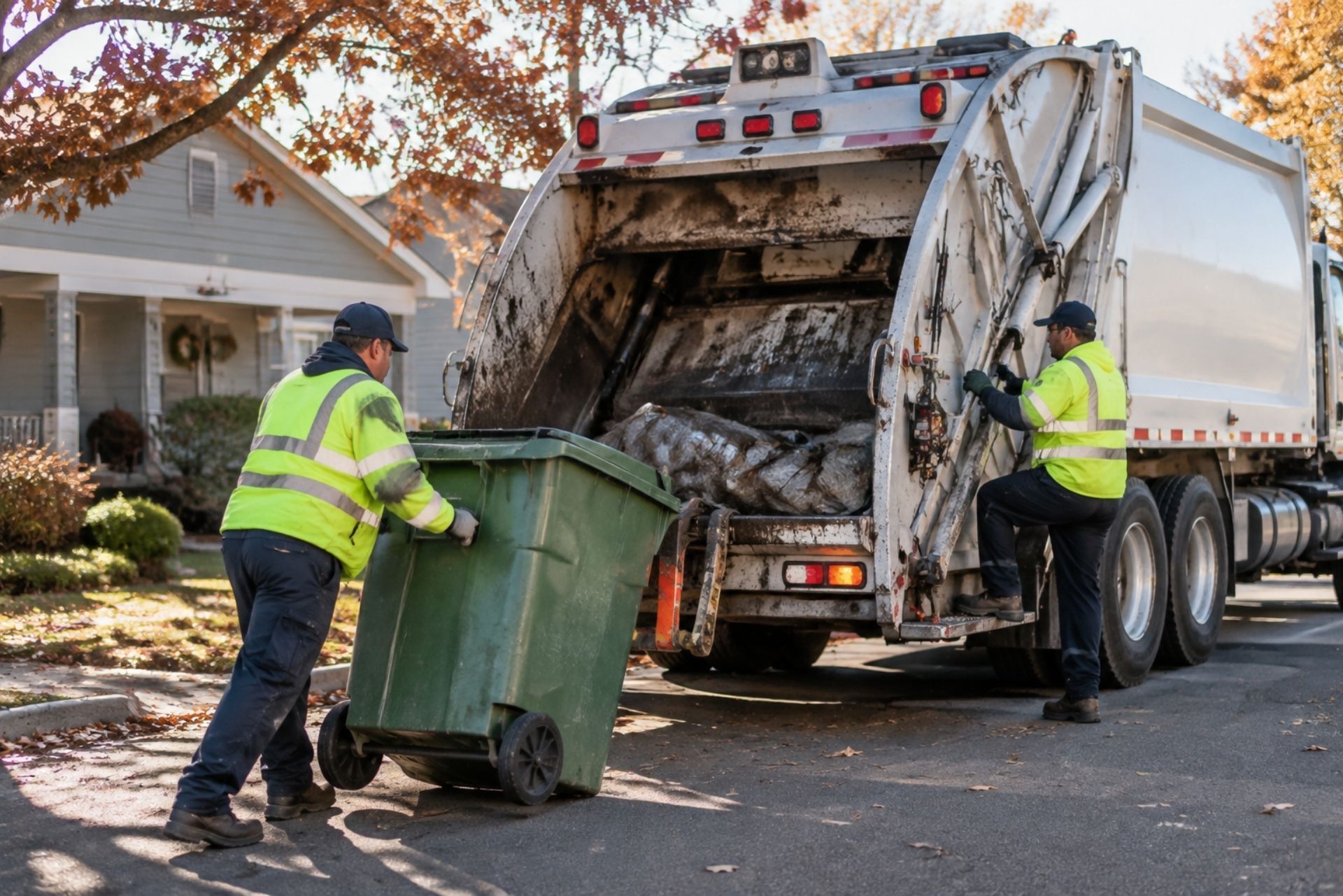
Your trucks are your largest assets. A new automated side loader or front loader represents a major capital outlay, and the specialized bodies, compactors, and lifting arms add significant value beyond the chassis.
Physical damage coverage on your auto policy handles collision and comprehensive losses to your trucks. The common mistake is insuring the vehicle at the chassis value only. If the packer body isn't properly listed and valued, a total loss can leave you short by tens of thousands of dollars.
Other equipment needs separate protection through inland marine or contractors equipment coverage:
- Containers and dumpsters: Roll-offs and commercial bins sit at customer sites for weeks and get stolen, burned, or crushed.
- Compactors and balers: Units installed at client locations often aren't covered under your auto policy at all.
- Yard equipment: Loaders, skid steers, and sorting equipment at your yard or a transfer facility.
- Tools and parts: Shop inventory and diagnostic equipment.
Fire deserves special attention. Garbage truck fires from lithium batteries, hot ashes, and pool chemicals in residential waste have become a recurring loss pattern. A driver dumping a burning load to save the truck may protect the vehicle, but the policy needs to cover the truck itself if it's lost.
Downtime is the hidden cost. A truck in the shop for six weeks means rented equipment or missed routes. Rental reimbursement and business income coverage keep a single loss from turning into a cash crisis.
Workers' Compensation and New Mexico State Mandates
Waste collection consistently ranks among the most dangerous jobs in the country. Your helpers ride the back of trucks, jump off and on at hundreds of stops, lift heavy cans, and work in traffic. Back strains, crushed fingers, and struck-by injuries are routine claim types.
New Mexico's Workers' Compensation Act, administered by the Workers' Compensation Administration, generally requires employers with three or more employees to carry coverage. That threshold can differ for certain industries, so confirm your specific obligations with the WCA or a licensed agent. In practice, almost any hauler running more than one truck needs a policy, and every municipal contract will demand one.
Your premium depends on your class codes and payroll. Drivers and helpers fall under higher-rated classifications than office staff, so getting employees coded correctly matters. Lumping a dispatcher into the driver class inflates your cost. Lumping drivers into clerical will get caught at audit.
That brings up premium audits. Your workers' comp premium starts with estimated payroll. At year end, the carrier audits actual payroll. If you landed a new city contract mid-year and added six helpers, expect a substantial audit bill. Update your carrier when payroll changes significantly, and set aside reserves if you're growing fast.
Watch out for 1099 helpers too. Calling someone an independent contractor doesn't exempt you if they work under your direction on your trucks. Auditors will often pick up their pay as payroll.
Meeting Municipal and Commercial Contract Requirements
Winning a city franchise or a large commercial account usually comes down to price and service. Keeping it comes down to paperwork. Municipal contracts in New Mexico include detailed insurance exhibits, and missing a single requirement can delay your start date or trigger a breach notice.
Typical contract insurance clauses specify:
- Minimum limits for auto, general liability, pollution, workers' comp, and umbrella
- Additional insured status for the city or client
- Waivers of subrogation on several policies
- Primary and non-contributory wording
- Notice of cancellation to the certificate holder
- Minimum carrier financial ratings
Read the insurance exhibit before you bid, not after you win. Send it to your agent and ask for a written confirmation that your current program complies, or a quote for what's missing. Price those changes into your bid.
COI turnaround matters more than most owners realize. Procurement offices and property managers won't release a purchase order without a valid certificate. An agent who takes a week to issue one can cost you a start date.
Additional Insured Status and Waivers of Subrogation
Additional insured status extends your liability coverage to the client for claims arising from your work. Insurance requirements for subcontractors in New Mexico often call for specific additional insured endorsements, including ISO forms CG 20 10 for ongoing operations and CG 20 37 for completed operations. If a contract names those forms, a generic blanket endorsement may not satisfy it.
A waiver of subrogation stops your insurer from suing the client to recover what it paid on a claim. Municipalities and contractors in New Mexico
typically require a waiver of subrogation on general liability, auto, and workers' compensation policies. Some carriers charge a small fee for each waiver, so blanket waiver endorsements usually make sense for haulers with several contracts.
Comparison Chart: Standard vs. Specialized Hauler Policies
Many small haulers start out on general trucking or contractor programs. As your contracts grow, those standard policies often leave gaps. Here's how a basic setup compares with a program built for waste operations.
| Coverage Area | Standard Trucking/Contractor Policy | Specialized Refuse Hauler Program |
|---|---|---|
| Auto liability | Basic limits, general freight rating | Higher limits, rated for waste routes and stops |
| Pollution | Excluded or sudden-only | Gradual releases, transportation and site coverage |
| Packer bodies | Often undervalued with chassis | Body and chassis valued separately |
| Containers | Usually not covered | Inland marine for bins and roll-offs |
| Additional insured | Limited or blanket only | Specific forms like CG 20 10 and CG 20 37 |
| Waiver of subrogation | Per-request, extra fees | Blanket waivers across policies |
| Workers' comp | Generic class handling | Accurate driver/helper codes, audit support |
| Contract compliance | Owner checks it alone | Agent reviews insurance exhibits |
The specialized program usually costs more up front. The trade-off is fewer surprise denials, faster contract approvals, and coverage that actually matches how garbage hauling claims happen.
No honest agent can quote your premium without seeing your fleet, drivers, and loss history. Here are the factors that move refuse hauler insurance costs the most:
- Loss history: Three to five years of claims carry the most weight. One large backing claim can affect your pricing for years.
- Driver records: MVRs with violations or at-fault accidents raise rates and can make individual drivers uninsurable.
- Fleet size and truck type: Residential rear loaders, automated side loaders, and roll-offs all rate differently.
- Radius and territory: Dense urban routes and long rural runs each carry distinct exposures.
- Payroll and class codes: These drive your workers' comp cost directly.
- Limits and deductibles: Higher deductibles lower premium but require cash reserves.
- Operations mix: Haulers handling construction debris, medical waste, or hazardous materials pay more than residential-only operations.
Taxes and fees hit the same budget line. Effective July 1, 2026, New Mexico raised Weight Distance Tax rates by 35%, the first adjustment since 2004. The tax applies to commercial vehicles with a gross vehicle weight over 26,000 pounds, which covers nearly every packer and roll-off truck. For a heavy refuse hauler traveling 15,000 miles per quarter, the July 2026 rate increase has pushed costs from roughly $600 to about $810 per quarter per vehicle. Across a ten-truck fleet, that's thousands more per year before a single insurance renewal.
Fleet Safety Programs and Telematics Discounts
The fastest way to control premiums is to give underwriters proof you manage risk. Haulers with documented safety programs regularly get better terms than those who just promise to be careful.
What underwriters want to see:
- Written driver hiring standards with MVR checks before hire and annually after
- Backing procedures, including spotters or camera systems
- Telematics tracking speed, hard braking, and idle time
- Forward and rear-facing dash cameras
- Regular safety meetings with signed attendance logs
- A return-to-work program for injured employees
Dash cameras pay for themselves quickly. When a car cuts in front of your truck and brakes hard, video often ends a liability dispute in days. Many carriers offer credits for telematics, and even when they don't, the claims you avoid will show up in your loss history at renewal.
Common Questions About Garbage Hauling Insurance
Can I use my personal truck insurance for a small hauling business? No. Personal auto policies exclude business hauling for hire, so any claim during a job could be denied. You need a commercial auto policy.
Does my auto policy cover a fluid spill from my garbage truck? Usually not, or only for sudden events like a crash. Gradual leaks typically need separate pollution liability coverage.
How much insurance does a New Mexico city contract require? It depends on the municipality and contract size. Get the insurance exhibit from the bid package and have your agent review it before you submit pricing.
Why did I get a big workers' comp bill after my policy ended? That's the year-end audit. If your actual payroll exceeded your estimate, the carrier charges the difference, so report hiring increases during the year.
What's the difference between occurrence and claims-made pollution policies? Occurrence policies cover incidents that happen during the policy period, no matter when the claim is filed. Claims-made policies cover claims filed while the policy is active, so canceling one can leave old contamination uncovered.
Do I need coverage for dumpsters sitting at customer sites? Yes, if you want them protected. Containers usually need inland marine coverage because auto policies don't cover them.
Making the Right Choice for Your Fleet
Garbage hauler insurance in New Mexico isn't a single policy. It's a coordinated program: commercial auto with real limits, pollution coverage that handles gradual leaks, equipment protection that values your packer bodies correctly, accurate workers' comp, and endorsements that satisfy every contract you sign.
With the 2026 Weight Distance Tax increase raising operating costs, it's tempting to trim coverage. Resist that. The haulers who get hurt are the ones who discover a gap after the spill or the crash.
Your next steps are simple. Pull your current policies and your largest contract's insurance exhibit. Compare them line by line, flag anything missing, and ask an agent who works with waste haulers to quote a program that fits your routes. Review it every year, especially after you add trucks or win a new contract. The right coverage lets you bid bigger jobs with confidence.
About The Author:
Dax Kastrin
As Founder and Agent at ERM Insurance, I’m committed to helping clients understand and manage risk through clear, straightforward coverage solutions. With professional designations as an Accredited Advisor in Insurance (AAI) and Associate in General Insurance (AINS), I focus on delivering dependable protection and personalized service for every individual and business I work with.
Your Business Insurance Solutions

Workers’ Compensation Insurance
Protect your workers from significant financial losses if they are injured or disabled while performing their duties as an employee.

Cyber Liability Insurance
Safeguard your business against financial losses from data breaches, especially those that involve sensitive customer information and other unforeseen cyber events, like cybercrime.

Directors & Officers Liability
Protect your C-suite officers and board members, as well as the companies they represent if they are the subject of a claim or investigation from their duties.

General Liability Insurance
Guard your business against the cost of claims that can be filed due to bodily injury to a third party, damage to third-party property, lawsuits, and more.

Business Owners Insurance
Reduce the cost of premiums by getting a business owner’s insurance, a coverage plan that combines commercial property insurance and general liability insurance.

Commercial Auto Insurance
Guard your business against financial losses from accidents involving company vehicles. Commercial auto insurance provides for bodily injury liability and property damage.

Commercial Property Insurance
Recover from financial losses involving damage to your physical assets, including furniture, physical building, office space, inventory, landscaping and fencing, signage, and more.

Lessor's Risk Insurance
Get coverage for your rental properties. A lessor’s risk insurance covers financial losses from acts of vandalism, litigation costs for lawsuits, theft of property owned by your tenants, and more.

Product Liability Insurance
Protect your companies from claims made against the goods you provide. This covers injuries caused by malfunctions of products, design defects, and more.
Choose Elemental Risk Management Today
Get a Plan Suited to Your Business
ERM assesses the risks that your company faces, as well as your industry, operations, workforce, and more.
Recover Quickly
With business insurance coverage, you’ll bounce back from adverse events that could have left your business on the brink of bankruptcy.
Avoid Overpaying
Through customized solutions, your business will get adequate coverage without unnecessary costs. We’ll keep premiums cost-effective.
Our Testimonials
Hear from our clients
“We recently changed our business insurance after over 20 years, and we couldn't be happier. We didn't realize how poor the service was, how unresponsive, and slow the service was of our previous carrier. Dax and his team have gone above and beyond to answer every question our business had, to ensure that we had the coverage we needed, and fully understood everything we were getting. Not only did we save money, but we have saved a lot of time with the quick responsiveness of this team. They are exceptional. Would Highly recommend, and provide references."
Laura Harrison
May 2021
"I love working with the ERM crew! They are always super inquisitive and willing to learn/ask questions to provide their clients with the best possible insurance solution. I would definitely recommend them to anyone looking for advice on their current policies and coverage."
Nicole Limpert
May 2021
“Elemental Risk Management has been our insurance agent for 2 years now. They are consistently shopping for us to have the very best quality of coverage, as well as the best rates available. They saved our company over $20,000.00 in premiums our first year doing business with them. They are also quick to respond to any need (COI's, accident reporting, etc.). I recommend the team at ERM very highly!
Ramona Mills
June 2021