Geothermal Energy Project Insurance
8:30am - 5:00pm Mon-Fri
Will Reply in 15min*
Over 180+ commercial clients covered
100% customer satisfaction guaranteed
Over 10 years of business insurance experience
Geothermal power plants tap into heat stored miles beneath the Earth's surface, and that depth creates a unique set of financial risks most standard insurance products simply don't address. A single exploratory well can cost $5 million to $10 million before you even confirm a viable heat resource exists. If the reservoir underperforms or a wellbore collapses, you're facing losses that would cripple most project budgets. That's why insurance designed specifically for geothermal energy projects has become a critical piece of the financing puzzle, especially as global investment in geothermal capacity accelerates through 2026. Lenders, equity partners, and government agencies all want to see that subsurface risk is covered before they'll commit capital. Whether you're developing a utility-scale plant or a smaller district heating system, understanding how these policies work, what they cover, and where the gaps hide will save you from expensive surprises. The market for this type of coverage is still maturing, and the options available today look very different from what was offered even three years ago. Getting the right policy structure in place early can mean the difference between a project that attracts funding and one that stalls in the planning phase.
Understanding Geothermal Energy Risks
Geothermal development carries risks that sit somewhere between oil and gas exploration and traditional power generation. The subsurface is unpredictable, equipment operates under extreme temperatures and pressures, and the timeline from exploration to revenue can stretch years. Insurers evaluate these projects differently than solar or wind because the core risk, whether usable heat actually exists at sufficient volume, can't be confirmed until you've already spent millions drilling.
Exploration and Resource Risk
The biggest financial exposure happens before the plant is even built. Exploration wells test whether a geothermal reservoir has adequate temperature, permeability, and fluid volume to sustain commercial power production. If the resource isn't there, or isn't sufficient, the investment in drilling is largely unrecoverable. This "dry hole" risk is the primary reason geothermal projects struggle to attract private capital compared to solar or wind, where the resource (sunlight, wind) is visible and well-modeled. Munich Re and KfW Bank have addressed this problem directly: their program now insures 30% to 70% of loans for geothermal drilling, backed by a €600 million facility. That kind of backstop has changed the calculus for developers who previously couldn't get financing past the exploration stage.
Operational and Environmental Hazards
Once a plant is running, the risk profile shifts. Turbines,
heat exchangers, and wellhead equipment operate under corrosive, high-temperature conditions that accelerate wear. Induced seismicity, where
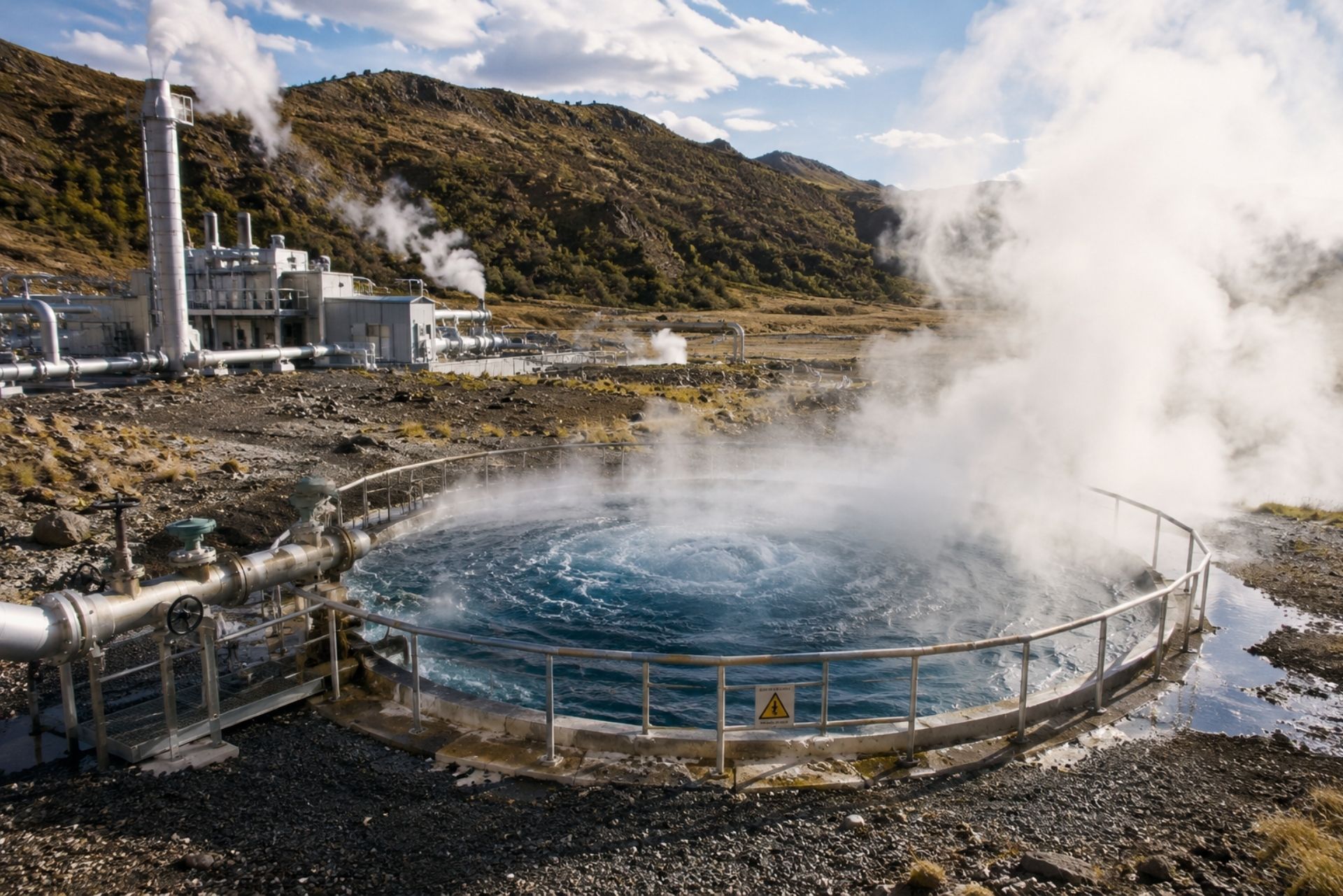
fluid injection triggers small earthquakes, has become a growing concern for regulators and communities near geothermal sites. Environmental liability from brine spills, hydrogen sulfide emissions, or groundwater contamination can generate claims that standard commercial general liability policies weren't designed to handle. You need coverage that accounts for these specific operational realities.

By: Dax Kastrin
Founder and Agent at ERM Insurance
Core Insurance Coverages for Geothermal Projects
A complete insurance program for a geothermal project typically stacks several policy types together. No single product covers the full lifecycle from exploration through decades of operation.
General Liability vs. Professional Liability
General liability (GL) covers third-party bodily injury and property damage, the basics you'd expect on any construction or industrial site. If a visitor is injured at your wellpad or drilling operations damage a neighboring property, GL responds. Professional liability, sometimes called errors and omissions, protects against claims arising from faulty engineering, geological consulting, or design work. For geothermal projects, the distinction matters because a reservoir engineer's flawed assessment can lead to millions in wasted drilling costs. GL won't cover that; professional liability will.
Property and Equipment Breakdown Coverage
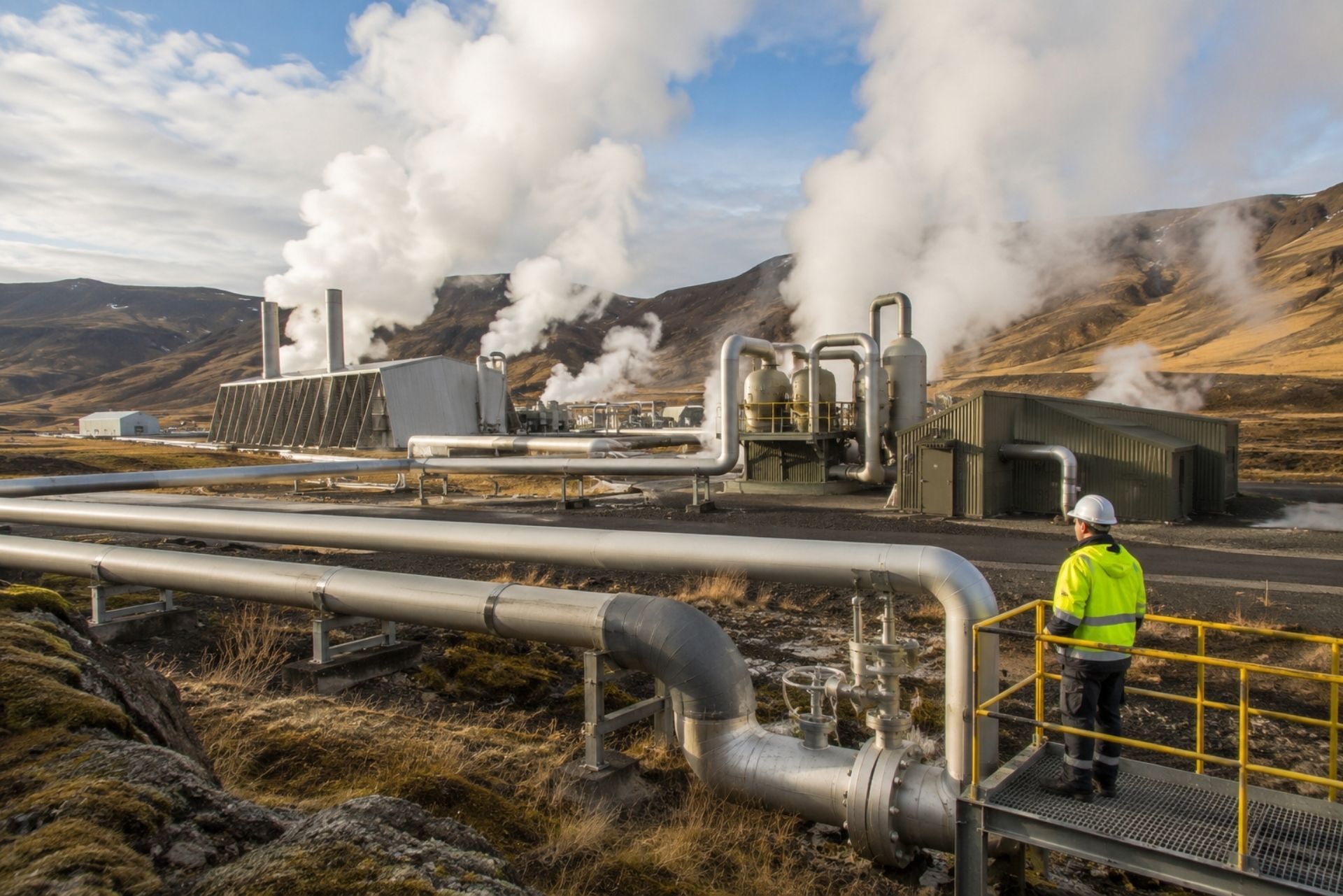
Geothermal plants rely on specialized equipment that's expensive to replace: downhole pumps, binary cycle turbines, and wellhead assemblies. Property coverage protects the physical assets, while equipment breakdown (sometimes called boiler and machinery) covers mechanical and electrical failures. The catch is that standard property policies often exclude damage from corrosion, scaling, or gradual deterioration, all of which are common in geothermal systems. You'll want endorsements or specialized policies that explicitly include these perils, or you'll find yourself with a denied claim when a heat exchanger fails after three years of mineral buildup.
Business Interruption and Delay in Start-Up
If your plant goes offline due to a covered loss, business interruption insurance replaces the revenue you would have earned. Delay in start-up (DSU) coverage does the same thing during the
construction phase, compensating for lost income when commissioning is pushed back by equipment failure, well problems, or other insured events. The 2026 energy and infrastructure insurance market outlook shows that DSU coverage has become a standard requirement from project lenders, not an optional add-on.
Comparison: Standard vs. Specialized Geothermal Coverage
Most developers start by asking whether their existing commercial insurance can cover a geothermal project. The short answer: it can't, at least not adequately. Here's a side-by-side look at where standard policies fall short.
Feature Comparison Table
| Coverage Feature | Standard Commercial Policy | Specialized Geothermal Policy |
|---|---|---|
| Subsurface resource risk | Not covered | Covered (exploration phase) |
| Drilling equipment loss | Limited or excluded | Full replacement cost |
| Induced seismicity liability | Excluded | Available as endorsement |
| Wellbore collapse/blowout | Not covered | Covered under well control |
| Corrosion/scaling damage | Excluded (gradual deterioration) | Covered with sub-limits |
| Delay in start-up | Rarely included | Standard inclusion |
| Business interruption | Basic (short indemnity period) | Extended (12-24 months) |
| Environmental liability | Pollution exclusion typical | Site-specific pollution coverage |
The price difference reflects the gap in coverage. Specialized geothermal policies typically run 1.5% to 3% of total project cost, while a standard commercial package might be 0.3% to 0.5% but leaves you exposed on the risks that actually matter.
Specialized Policies for the Exploration Phase
The exploration phase is where most geothermal projects either prove their viability or collapse. Insurance products for this stage are relatively new and still evolving.
Geothermal Resource Confirmation Insurance
Resource confirmation insurance pays out if exploratory drilling fails to find a commercially viable heat resource. Think of it as a safety net for your drilling budget. The policy typically covers a percentage of well costs, often 50% to 80%, if the reservoir doesn't meet predefined temperature, flow rate, or permeability thresholds. Geothermal developers in several countries have called de-risking facilities a milestone for energy security, and resource confirmation insurance is a core component of those facilities. The premiums aren't cheap, often 8% to 15% of the insured drilling costs, but they unlock financing that would otherwise be unavailable.
Drilling and Well Control Protection
Well control insurance covers the costs of regaining control of a well after a blowout, kick, or uncontrolled flow event. It also covers the cost of redrilling if the original wellbore is lost. This is distinct from resource confirmation coverage: well control responds to physical events during drilling, not to the absence of a viable resource. A blowout at a geothermal well can release superheated steam, brine, and toxic gases, creating both property damage and environmental liability. Policies typically cover containment costs, cleanup, third-party claims, and redrilling expenses. California's recent
commitment to funding a geothermal cost-share program has further reduced the financial barrier for developers willing to drill in the state's geothermal zones.
Common Questions About Geothermal Insurance
FAQ: Why is geothermal insurance more expensive than solar?
Geothermal carries subsurface risk that solar doesn't. You can measure sunlight with historical weather data, but you can't confirm a geothermal reservoir without drilling a multi-million-dollar well. That uncertainty drives higher premiums, though global commercial insurance rates fell 6% in Q2 2026, which has helped bring some geothermal pricing down as well.
FAQ: Does basic property insurance cover drilling rigs?
Usually not. Most commercial property policies exclude mobile drilling equipment and downhole tools. You'll need an inland marine or contractor's equipment policy specifically scheduled for your rig and associated gear.
FAQ: How do I prove resource risk to an underwriter?
Underwriters want geological survey data, magnetotelluric studies, temperature gradient measurements, and ideally results from slim-hole or test wells. The more data you bring, the better your terms. Some insurers will also accept third-party resource assessments from recognized geothermal consultants.
FAQ: Can I get insurance for a small residential geothermal loop?
Yes, but it's different from project-level coverage. Residential ground-source heat pump systems are typically covered under homeowner's insurance for the indoor equipment, while the underground loop may need a separate equipment warranty or rider. The risk profile is much lower than a commercial geothermal plant.
FAQ: What happens if the heat source underperforms?
If you have resource confirmation insurance, the policy pays out based on predefined performance thresholds. Without that coverage, underperformance is your financial burden. Some developers negotiate performance guarantees with their drilling contractors as an alternative risk transfer mechanism.
What This Means for Your Business
Getting insurance for a geothermal energy project isn't a box-checking exercise. It's a strategic decision that directly affects your ability to secure financing, manage construction risk, and protect long-term revenue. The policies available in 2026 are more sophisticated than anything the market offered five years ago, but they still require careful structuring.
Start by mapping your risk exposure across each project phase: exploration, construction, and operations. Match each risk to the right policy type, and don't assume a single product will cover everything. Work with a broker who has specific experience in geothermal or renewable energy insurance, not just general commercial lines. The 2026 Geothermal Investment Forum is one place to connect with specialized underwriters and brokers who understand these projects.
Review your coverage annually. Geothermal plants change over time as wells age, equipment degrades, and reservoir conditions shift. A policy that fit your project at commissioning may have gaps five years later. The developers who treat insurance as an active part of project management, rather than a one-time purchase, are the ones who avoid the claims disputes that can derail an otherwise successful operation.
About The Author:
Dax Kastrin
As Founder and Agent at ERM Insurance, I’m committed to helping clients understand and manage risk through clear, straightforward coverage solutions. With professional designations as an Accredited Advisor in Insurance (AAI) and Associate in General Insurance (AINS), I focus on delivering dependable protection and personalized service for every individual and business I work with.
Your Business Insurance Solutions

Workers’ Compensation Insurance
Protect your workers from significant financial losses if they are injured or disabled while performing their duties as an employee.

Cyber Liability Insurance
Safeguard your business against financial losses from data breaches, especially those that involve sensitive customer information and other unforeseen cyber events, like cybercrime.

Directors & Officers Liability
Protect your C-suite officers and board members, as well as the companies they represent if they are the subject of a claim or investigation from their duties.

General Liability Insurance
Guard your business against the cost of claims that can be filed due to bodily injury to a third party, damage to third-party property, lawsuits, and more.

Business Owners Insurance
Reduce the cost of premiums by getting a business owner’s insurance, a coverage plan that combines commercial property insurance and general liability insurance.

Commercial Auto Insurance
Guard your business against financial losses from accidents involving company vehicles. Commercial auto insurance provides for bodily injury liability and property damage.

Commercial Property Insurance
Recover from financial losses involving damage to your physical assets, including furniture, physical building, office space, inventory, landscaping and fencing, signage, and more.

Lessor's Risk Insurance
Get coverage for your rental properties. A lessor’s risk insurance covers financial losses from acts of vandalism, litigation costs for lawsuits, theft of property owned by your tenants, and more.

Product Liability Insurance
Protect your companies from claims made against the goods you provide. This covers injuries caused by malfunctions of products, design defects, and more.
Choose Elemental Risk Management Today
Get a Plan Suited to Your Business
ERM assesses the risks that your company faces, as well as your industry, operations, workforce, and more.
Recover Quickly
With business insurance coverage, you’ll bounce back from adverse events that could have left your business on the brink of bankruptcy.
Avoid Overpaying
Through customized solutions, your business will get adequate coverage without unnecessary costs. We’ll keep premiums cost-effective.
Our Testimonials
Hear from our clients
“We recently changed our business insurance after over 20 years, and we couldn't be happier. We didn't realize how poor the service was, how unresponsive, and slow the service was of our previous carrier. Dax and his team have gone above and beyond to answer every question our business had, to ensure that we had the coverage we needed, and fully understood everything we were getting. Not only did we save money, but we have saved a lot of time with the quick responsiveness of this team. They are exceptional. Would Highly recommend, and provide references."
Laura Harrison
May 2021
"I love working with the ERM crew! They are always super inquisitive and willing to learn/ask questions to provide their clients with the best possible insurance solution. I would definitely recommend them to anyone looking for advice on their current policies and coverage."
Nicole Limpert
May 2021
“Elemental Risk Management has been our insurance agent for 2 years now. They are consistently shopping for us to have the very best quality of coverage, as well as the best rates available. They saved our company over $20,000.00 in premiums our first year doing business with them. They are also quick to respond to any need (COI's, accident reporting, etc.). I recommend the team at ERM very highly!
Ramona Mills
June 2021