Colorado Mobile Home and RV Park Insurance
8:30am - 5:00pm Mon-Fri
Will Reply in 15min*
Over 180+ commercial clients covered
100% customer satisfaction guaranteed
Over 10 years of business insurance experience
Owning a mobile home park or RV park in Colorado puts you at the intersection of two powerful forces: a booming outdoor recreation economy and some of the most volatile weather conditions in the country. Colorado ranks as the sixth-costliest state for property insurance, with premiums climbing 58% in recent years. That trend hits park owners especially hard because you're responsible for infrastructure, common areas, and the safety of dozens or even hundreds of tenants and guests. Getting the right insurance for your Colorado mobile home or RV park isn't optional; it's the foundation that keeps your business standing after a hailstorm, a lawsuit, or a wildfire evacuation. The stakes are high, and the coverage options can be confusing. Your park faces risks that a standard
commercial property policy simply doesn't account for: hookup liability, tenant-owned structures, seasonal occupancy swings, and the unique regulatory environment Colorado imposes on land-lease communities. Whether you operate a quiet 20-pad mobile home park outside Pueblo or a 150-site RV resort near Estes Park, you need coverage built around the realities of your property, your guests, and your geography. This guide breaks down the specific risks, required coverages, and practical strategies that Colorado park owners should understand before signing or renewing a policy.
Understanding Colorado Park Liability and Property Risks
Colorado park owners face a risk profile that's distinct from operators in flatter, milder states. Your property sits in a state where a sunny afternoon can turn into a damaging hailstorm in 20 minutes, and where wildfire smoke can drift hundreds of miles from its source. Experts warn that Colorado is on the brink of an insurance crisis similar to what California has experienced, meaning premiums will likely keep rising for high-risk properties. Understanding these risks is the first step toward building a policy that actually protects you.
Unique Weather Hazards in the Rockies
Hail causes more insured property damage in Colorado than almost any other peril. A single spring storm can shred RV awnings, crack skirting on mobile homes, and destroy communal structures in minutes. Then there's the wildfire threat, which has expanded beyond mountain communities into the Front Range suburbs. Wind events, flash flooding in canyon areas, and heavy snow loads at elevation all compound the problem. Your policy needs to reflect these specific perils, not just generic "weather damage" language.
State-Specific Regulatory Compliance
Colorado has tightened regulations around mobile home parks in recent years. The state passed legislation aimed at cutting insurance costs and stabilizing the market, but those laws also impose compliance requirements on park owners. You're expected to maintain habitable conditions, follow specific eviction procedures, and meet safety codes for electrical hookups and water systems. Falling out of compliance doesn't just invite fines; it can void portions of your insurance coverage. Make sure your agent understands Colorado's Mobile Home Park Act and how it affects your policy obligations.

By: Dax Kastrin
Founder and Agent at ERM Insurance
Core Coverage Components for Park Owners
A solid insurance package for a Colorado park isn't a single policy. It's a collection of coverages that work together to protect your income, your property, and your legal exposure. Here's what the foundation looks like.
General Liability and Guest Injuries
General liability is your first line of defense against lawsuits. If a guest trips over a tree root on your property, slips on an icy walkway, or gets injured at your pool, this coverage pays for medical bills and legal defense. Most lenders and municipalities require a minimum of $1 million per occurrence and $2 million aggregate. For parks with amenities like playgrounds, fishing ponds, or laundry facilities, you'll want to make sure those specific exposures are listed on the policy. An unlisted amenity can become an uncovered claim.
Physical Property and Infrastructure Protection
Your buildings, utility systems, roads, and common areas all need property coverage. This includes the clubhouse, maintenance buildings, laundry facilities, electrical pedestals, and water/sewer infrastructure. Replacement cost coverage is worth the premium difference over actual cash value, especially in Colorado where construction costs have climbed steadily. If a hailstorm destroys your office roof, you don't want to be paid based on a depreciated 15-year-old structure.
Specialized RV Park Endorsements
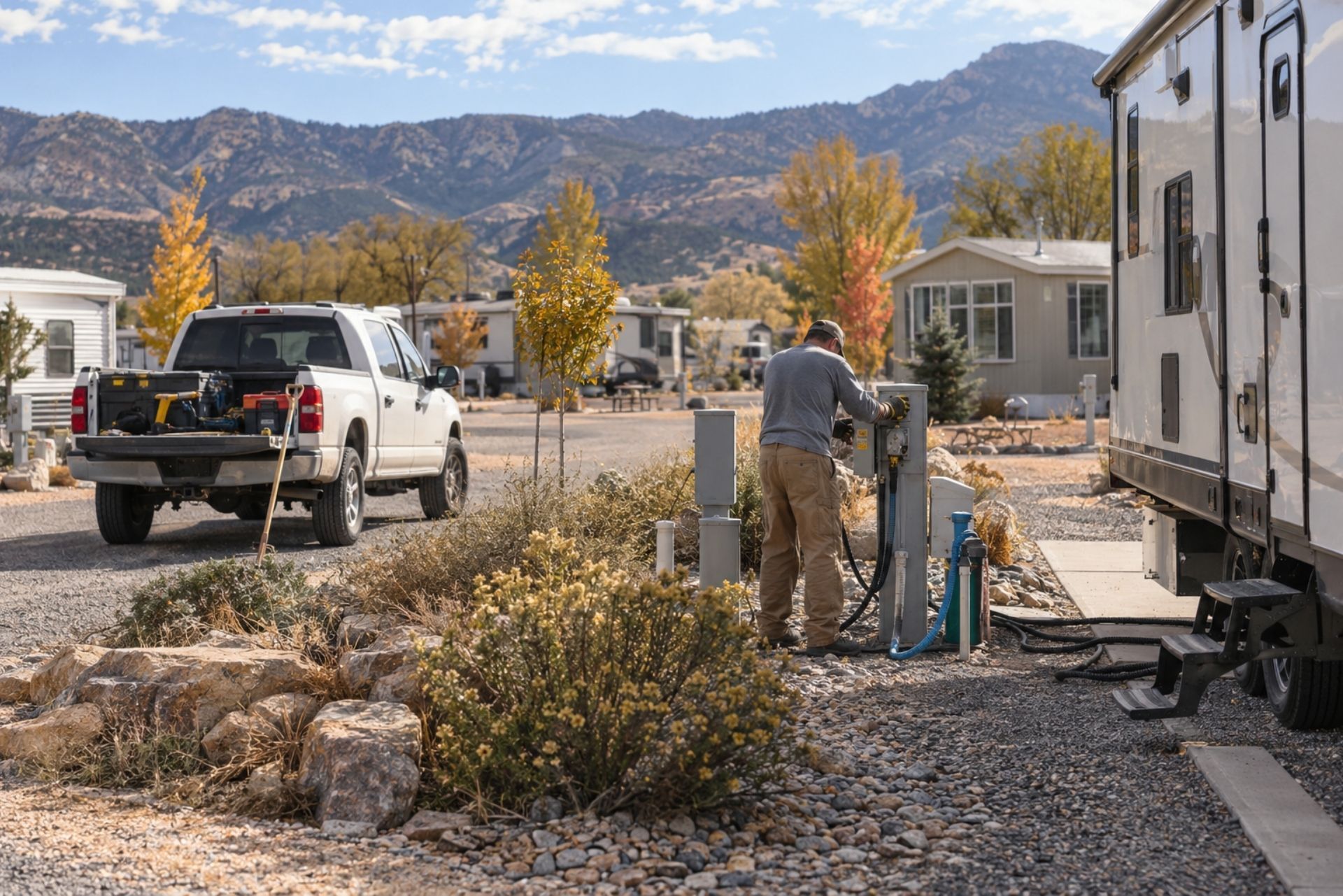
RV parks carry unique exposures that standard commercial policies miss. Hookup liability covers damage caused by your electrical, water, or sewer connections to a guest's RV. If a faulty pedestal fries someone's electrical system, you're looking at a $10,000 to $50,000 claim. Pollution liability matters too, particularly if a sewage line breaks and contaminates soil or groundwater. These endorsements aren't expensive relative to the risk they cover, but they're rarely included in a base policy.
Comparison: Basic vs. Comprehensive Park Policies
Not all park insurance policies offer the same depth of protection. Here's how a basic policy stacks up against a more comprehensive package:
| Coverage Area | Basic Policy | Comprehensive Policy |
|---|---|---|
| General Liability | $1M per occurrence | $1M/$2M with umbrella option |
| Property Coverage | Named perils only | All-risk (open perils) |
| Hookup Liability | Not included | Included |
| Business Interruption | Limited or none | 12 months lost income |
| Pollution/Environmental | Excluded | Included via endorsement |
| Wildfire Coverage | May have sublimits | Full replacement cost |
| Tenant Discrimination Claims | Not covered | Covered under management liability |
The price gap between basic and comprehensive coverage is often 20-35%, but the protection gap is enormous. A basic policy might save you $2,000 a year in premiums while leaving you exposed to six-figure claims.
Insurance carriers price your policy based on several factors specific to your operation. Location matters most: a park in a wildfire-prone area near Colorado Springs will pay significantly more than one on the Eastern Plains. The number of pads or sites, your annual revenue, the age and condition of infrastructure, and your claims history all factor in. Parks with amenities like pools or propane service pay more due to the added liability. RV insurance costs vary widely based on vehicle type and usage, and the same principle applies to park-level coverage: the more variables, the more complex the pricing. Expect annual premiums for a mid-size Colorado park to range from $8,000 to $25,000 depending on these factors. Carriers also look at your loss-control measures, so investing in safety upgrades can directly reduce your premium.
Managing Risks in High-Altitude Environments
Operating a park at elevation introduces risks that don't exist at sea level. UV exposure degrades roofing and siding faster. Temperature swings stress plumbing systems. And the wildfire-urban interface keeps expanding as more people move into mountain communities.
Wildfire Mitigation and Insurance Eligibility
Some carriers won't write policies for parks in high-risk wildfire zones unless you've taken specific mitigation steps. Creating defensible space around structures, using fire-resistant materials, and maintaining access roads wide enough for fire trucks are common requirements. The campground insurance market has tightened considerably, and parks that can demonstrate active wildfire mitigation have a much easier time finding coverage at reasonable rates. Document everything you do: photos, receipts, maintenance logs. Underwriters want proof, not promises.
Winter Maintenance and Slip-and-Fall Prevention
Slip-and-fall claims spike between November and March in Colorado parks. Ice forms fast at elevation, and guests unfamiliar with mountain conditions are especially vulnerable. A documented snow and ice removal plan, with timestamps and crew logs, is your best defense against these claims. Salting walkways, maintaining adequate lighting, and posting warning signs aren't just good practice; they're evidence that you exercised reasonable care if a claim lands on your desk.
Common Questions About Colorado Park Insurance
- Does my policy cover tenant-owned mobile homes? No. Your policy covers the land, infrastructure, and common areas. Tenants need their own homeowner's or renter's policy for their structures and belongings.
- What's the difference between named perils and open perils? Named perils only covers the specific risks listed in the policy (fire, wind, hail, etc.). Open perils covers everything except what's specifically excluded. Open perils is broader and more protective.
- Can I bundle mobile home park and RV park coverage? Yes, if you operate both on the same property. Many carriers offer package policies that cover mixed-use parks under a single program.
- Do I need liquor liability if I host events? If you serve or allow alcohol at park events, yes. A single alcohol-related injury can generate a claim that exceeds your general liability limits.
- How often should I review my policy? Annually, at minimum. Review after any major improvement, expansion, or significant claim. Your coverage should reflect your current operation, not last year's.
Why Some Colorado Parks Are Turning to Captive Insurance
The traditional insurance market for parks has contracted. Fewer carriers are willing to write policies in wildfire-prone states, and those that remain are charging more. Some park owners and campground operators are exploring captive insurance solutions as an alternative. A captive is essentially a self-insurance structure where a group of similar businesses pools their risk. It requires significant upfront capital and ongoing management, so it's not for every operator. But for larger parks or ownership groups with multiple properties, captives can provide more stable pricing and broader coverage than the open market currently offers.
What Colorado's Insurance Reforms Mean for Park Owners
Colorado's legislature has been active on insurance reform. Recent bills have targeted transparency in rate-setting, restrictions on non-renewal practices, and consumer protections for policyholders in high-risk areas. The state's
efforts to reduce insurance costs mirror what other western states have attempted, with mixed results. For park owners, these reforms mean you may have more options for appeals if your carrier tries to non-renew or dramatically increase your premium. Stay connected with your agent and the Colorado Division of Insurance to understand your rights as these regulations evolve.
Coverage Gaps That Catch Park Owners Off Guard
Three coverage gaps trip up Colorado park owners more than any others. First, business interruption coverage is often insufficient or missing entirely. If a wildfire forces an evacuation and you lose two months of rental income, a basic policy won't make you whole. Second, many policies exclude or sublimit flood damage, which matters if your park sits near a creek or in a flash-flood zone. You'll likely need a separate flood policy through the NFIP or a private carrier. Third, cyber liability is increasingly relevant. If you process credit card payments for site rentals and suffer a data breach, your general liability policy won't cover the resulting costs. A standalone cyber endorsement typically runs $500 to $1,500 annually and is worth every dollar.
Seasonal vs. Year-Round Coverage Considerations
Colorado's RV parks often operate seasonally, shutting down from late October through April. Your insurance should reflect that. Some carriers offer seasonal rating that reduces your premium during months when the park is closed. But don't assume "closed" means "no risk." Frozen pipes, roof collapses from snow load, and break-ins all happen during the off-season. You still need property coverage year-round, even if your liability exposure drops when guests aren't present. Talk to your agent about
how RV park coverage works during shoulder seasons and closures so you're not paying for full occupancy risk twelve months a year.
Making the Right Choice for Your Property
The right insurance for your Colorado mobile home or RV park depends on your specific operation: its size, location, amenities, and risk tolerance. Don't settle for a generic commercial policy that wasn't designed for the unique exposures park owners face. Work with an agent or broker who specializes in hospitality or manufactured housing, and get at least three quotes before committing.
Review your policy every year, especially after adding sites, upgrading infrastructure, or experiencing a claim. Colorado's insurance market is shifting fast, and a policy that worked two years ago may have gaps today. Invest in loss-control measures like wildfire mitigation, winter maintenance plans, and documented safety inspections. These steps don't just reduce your risk; they make you a more attractive account to carriers, which translates directly into better coverage at lower cost.
Your park is likely your biggest investment. Protect it with coverage that matches the real risks you face, not just the minimum your lender requires.
About The Author:
Dax Kastrin
As Founder and Agent at ERM Insurance, I’m committed to helping clients understand and manage risk through clear, straightforward coverage solutions. With professional designations as an Accredited Advisor in Insurance (AAI) and Associate in General Insurance (AINS), I focus on delivering dependable protection and personalized service for every individual and business I work with.
Your Business Insurance Solutions

Workers’ Compensation Insurance
Protect your workers from significant financial losses if they are injured or disabled while performing their duties as an employee.

Cyber Liability Insurance
Safeguard your business against financial losses from data breaches, especially those that involve sensitive customer information and other unforeseen cyber events, like cybercrime.

Directors & Officers Liability
Protect your C-suite officers and board members, as well as the companies they represent if they are the subject of a claim or investigation from their duties.

General Liability Insurance
Guard your business against the cost of claims that can be filed due to bodily injury to a third party, damage to third-party property, lawsuits, and more.

Business Owners Insurance
Reduce the cost of premiums by getting a business owner’s insurance, a coverage plan that combines commercial property insurance and general liability insurance.

Commercial Auto Insurance
Guard your business against financial losses from accidents involving company vehicles. Commercial auto insurance provides for bodily injury liability and property damage.

Commercial Property Insurance
Recover from financial losses involving damage to your physical assets, including furniture, physical building, office space, inventory, landscaping and fencing, signage, and more.

Lessor's Risk Insurance
Get coverage for your rental properties. A lessor’s risk insurance covers financial losses from acts of vandalism, litigation costs for lawsuits, theft of property owned by your tenants, and more.

Product Liability Insurance
Protect your companies from claims made against the goods you provide. This covers injuries caused by malfunctions of products, design defects, and more.
Choose Elemental Risk Management Today
Get a Plan Suited to Your Business
ERM assesses the risks that your company faces, as well as your industry, operations, workforce, and more.
Recover Quickly
With business insurance coverage, you’ll bounce back from adverse events that could have left your business on the brink of bankruptcy.
Avoid Overpaying
Through customized solutions, your business will get adequate coverage without unnecessary costs. We’ll keep premiums cost-effective.
Our Testimonials
Hear from our clients
“We recently changed our business insurance after over 20 years, and we couldn't be happier. We didn't realize how poor the service was, how unresponsive, and slow the service was of our previous carrier. Dax and his team have gone above and beyond to answer every question our business had, to ensure that we had the coverage we needed, and fully understood everything we were getting. Not only did we save money, but we have saved a lot of time with the quick responsiveness of this team. They are exceptional. Would Highly recommend, and provide references."
Laura Harrison
May 2021
"I love working with the ERM crew! They are always super inquisitive and willing to learn/ask questions to provide their clients with the best possible insurance solution. I would definitely recommend them to anyone looking for advice on their current policies and coverage."
Nicole Limpert
May 2021
“Elemental Risk Management has been our insurance agent for 2 years now. They are consistently shopping for us to have the very best quality of coverage, as well as the best rates available. They saved our company over $20,000.00 in premiums our first year doing business with them. They are also quick to respond to any need (COI's, accident reporting, etc.). I recommend the team at ERM very highly!
Ramona Mills
June 2021