Arizona Solar Farm Insurance
8:30am - 5:00pm Mon-Fri
Will Reply in 15min*
Over 180+ commercial clients covered
100% customer satisfaction guaranteed
Over 10 years of business insurance experience
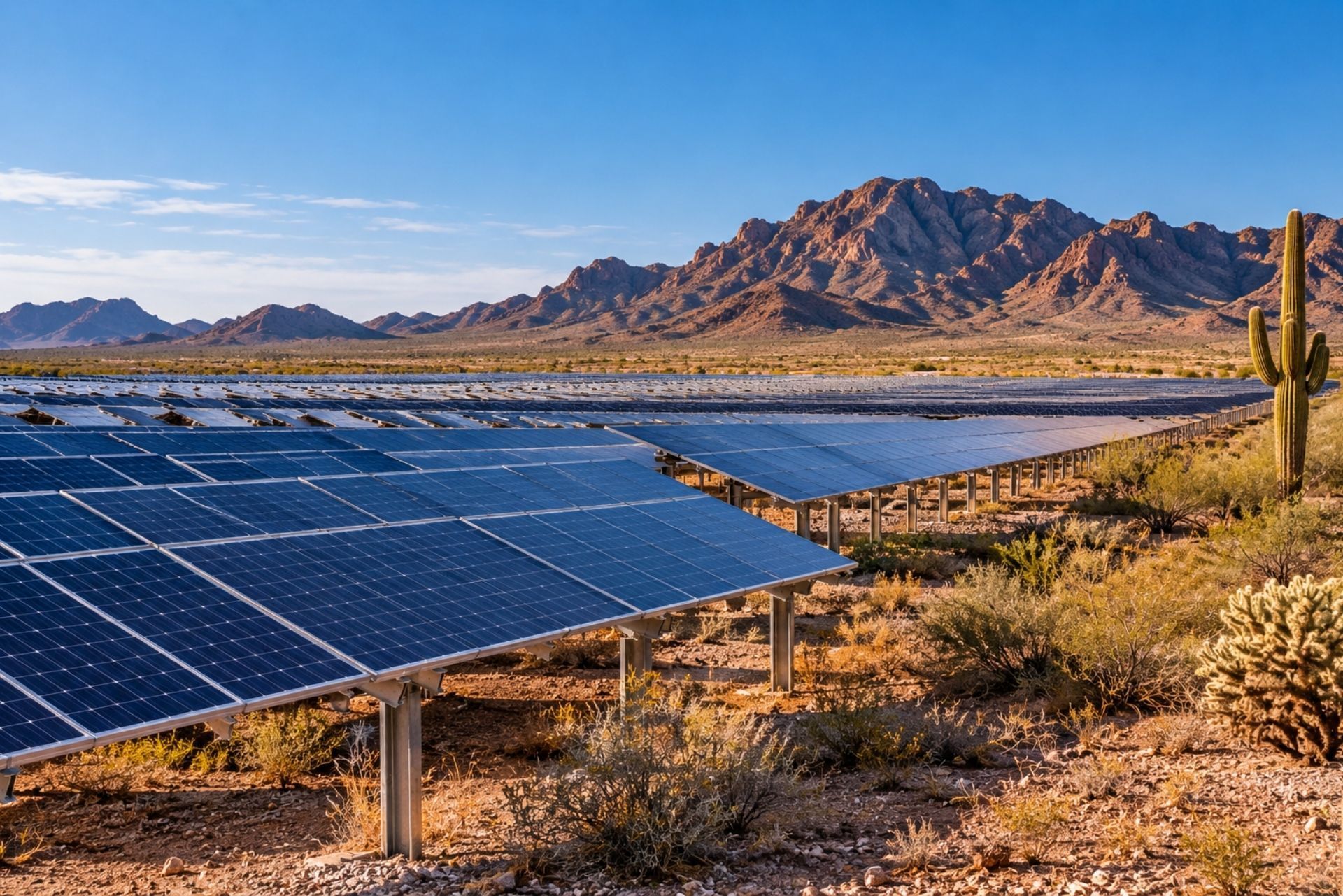
Arizona's desert sun makes it one of the best places in the country to generate solar energy, but that same environment punishes the equipment doing the work. Between summer surface temperatures that exceed 150°F on dark panel surfaces, monsoon winds that can top 80 mph, and haboobs that sandblast everything in their path, solar operators here face a risk profile unlike anywhere else in the U.S. A solid insurance program isn't optional; it's the difference between a profitable 25-year asset and a financial disaster after a single storm season. If you're developing, financing, or operating a
solar installation in the Grand Canyon State, understanding how extreme heat, monsoons, dust storms, hail, property damage, business interruption, and liability all interact with your coverage is essential. This guide breaks down each of those risks, the policy types that address them, and practical steps you can take to protect your investment while keeping premiums manageable.
The Unique Risk Profile of Arizona Solar Operations
Arizona's combination of extreme heat, violent summer storms, and persistent airborne particulate creates a triple threat that standard commercial property policies weren't designed to handle. Each of these hazards degrades equipment differently, and each demands specific insurance considerations. Understanding the mechanics of each risk helps you build a policy stack that actually matches your exposure.
Extreme Heat and Thermal Stress on Photovoltaic Components
Photovoltaic cells lose efficiency as temperatures climb, but the bigger insurance concern is accelerated material degradation. Prolonged exposure to ambient temperatures above 115°F, common in Maricopa and Pinal counties from June through September, causes thermal cycling stress on solder joints, backsheets, and junction boxes. Over time, this leads to hotspot failures, delamination, and increased fire risk.
That fire risk is real. A 2026 risk assessment found that 84% of solar farm fire events are equipment-driven brushfires originating within the facility rather than from external wildfires. If your site includes battery energy storage, the stakes climb higher: the risk of fire or explosion for on-site power storage is ten times greater than for grid-only assets. Underwriters know this, and they'll price accordingly.
Monsoon Season: Microbursts and Wind Damage
Arizona's monsoon season runs roughly from mid-June through September, and it brings sudden, localized storms with wind gusts that can shred tracker systems and send unsecured panels airborne. Microbursts are the primary concern because they concentrate destructive wind energy over a small area, sometimes hitting one section of a solar farm while leaving adjacent rows untouched.
The damage pattern from microbursts creates unique claims challenges. You might have 200 destroyed modules in a single row with no visible damage 50 feet away, making it critical that your property policy doesn't impose broad deductibles tied to total insured value when the actual damage is concentrated.
Dust Storms and Abrasive Degradation
Haboobs, the massive dust walls that roll through the Phoenix metro and surrounding desert, do more than coat panels in grime. Fine silica particles traveling at high speed act like sandpaper on anti-reflective coatings, gradually reducing light transmission and panel output. Arizona climatologists launched a new 1-to-5 Dust Storm Intensity Scale in June 2026 to better quantify monsoon-related dust risks, which could eventually influence how insurers model exposure in specific regions.
Dust accumulation also affects inverters and electrical connections. Abrasive particles infiltrate enclosures and accelerate wear on cooling fans and contactors. Your policy should account for the cumulative nature of dust damage, not just single-event losses.

By: Dax Kastrin
Founder and Agent at ERM Insurance
Essential Coverage Types for Solar Developers
A comprehensive insurance program for Arizona solar operations typically involves three core coverage types, each addressing a different category of financial exposure. Gaps between these policies are where most unpleasant surprises happen.
Physical Damage and Property Insurance
This is your foundation. Property coverage protects the physical assets: panels, inverters, racking, transformers, substations, and cabling. In Arizona, you want a policy written on an "all-risk" (or "special form") basis, which covers everything except what's specifically excluded. Pay close attention to these details:
- Named storm and wind deductibles, which can spike after monsoon claims
- Sub-limits on electrical and mechanical breakdown
- Whether dust and sand abrasion qualifies as a covered peril or falls under a wear-and-tear exclusion
- Flood coverage for sites near washes or drainage channels that fill during monsoons
Hail deserves its own line item in your risk assessment. Across the U.S., hail accounts for 73% of all financial losses for solar projects in 2026, despite representing only 6% of total loss incidents. A single severe hailstorm can cause millions in damage across a utility-scale site.
Business Interruption and Lost Revenue Protection
Physical damage is only half the equation. When panels are down, you're not generating revenue, and your power purchase agreement (PPA) obligations don't pause. Business interruption (BI) insurance covers the income you lose during the repair period, including the waiting period for replacement equipment that can stretch months for specialized components like central inverters.
Key variables in a BI policy include the indemnity period (how long coverage lasts after a loss event), the waiting period before coverage kicks in, and whether the policy covers partial losses in output, not just total shutdowns. For Arizona sites, we recommend an indemnity period of at least 12 months given supply chain realities for solar components.
General Liability and Environmental Risks
General liability protects you against third-party bodily injury and property damage claims. For solar farms, common scenarios include a contractor or visitor injured on-site, damage to neighboring property from wind-blown debris during a storm, or herbicide runoff affecting adjacent land.
Environmental liability is often overlooked but matters in Arizona. Battery storage systems contain chemicals that can contaminate soil or groundwater if containment fails. Transformer oil spills are another common exposure. A standalone pollution liability policy fills gaps that general liability typically excludes.
Comparison of Standard vs. Specialized Solar Policies
Not all insurance policies treat solar assets the same way. A standard commercial property form and a purpose-built solar energy policy can look similar on the declarations page but diverge sharply in the details.
Coverage Comparison Table
| Feature | Standard Commercial Property | Specialized Solar Policy |
|---|---|---|
| Hail damage | Often sub-limited or excluded | Full replacement cost, specific hail triggers |
| Inverter/electrical breakdown | Requires separate equipment breakdown endorsement | Typically included |
| Dust/sand abrasion | Usually excluded as wear and tear | May cover acute storm-related abrasion |
| Business interruption | Generic formula, may not fit PPA structures | Tailored to solar revenue models and PPA terms |
| Tracker system mechanical failure | Excluded | Covered under equipment breakdown |
| Deductible structure | Percentage of total insured value | Per-occurrence or per-unit options available |
| Wildfire/brushfire | Covered, but may exclude facility-originating fires | Covers internal fire events with proper O&M documentation |
The cost difference between standard and specialized coverage is real, but the payout difference after a major loss event can be enormous. A standard policy with a 5% wind/hail deductible on a $50 million site means you're absorbing the first $2.5 million of any storm loss out of pocket.
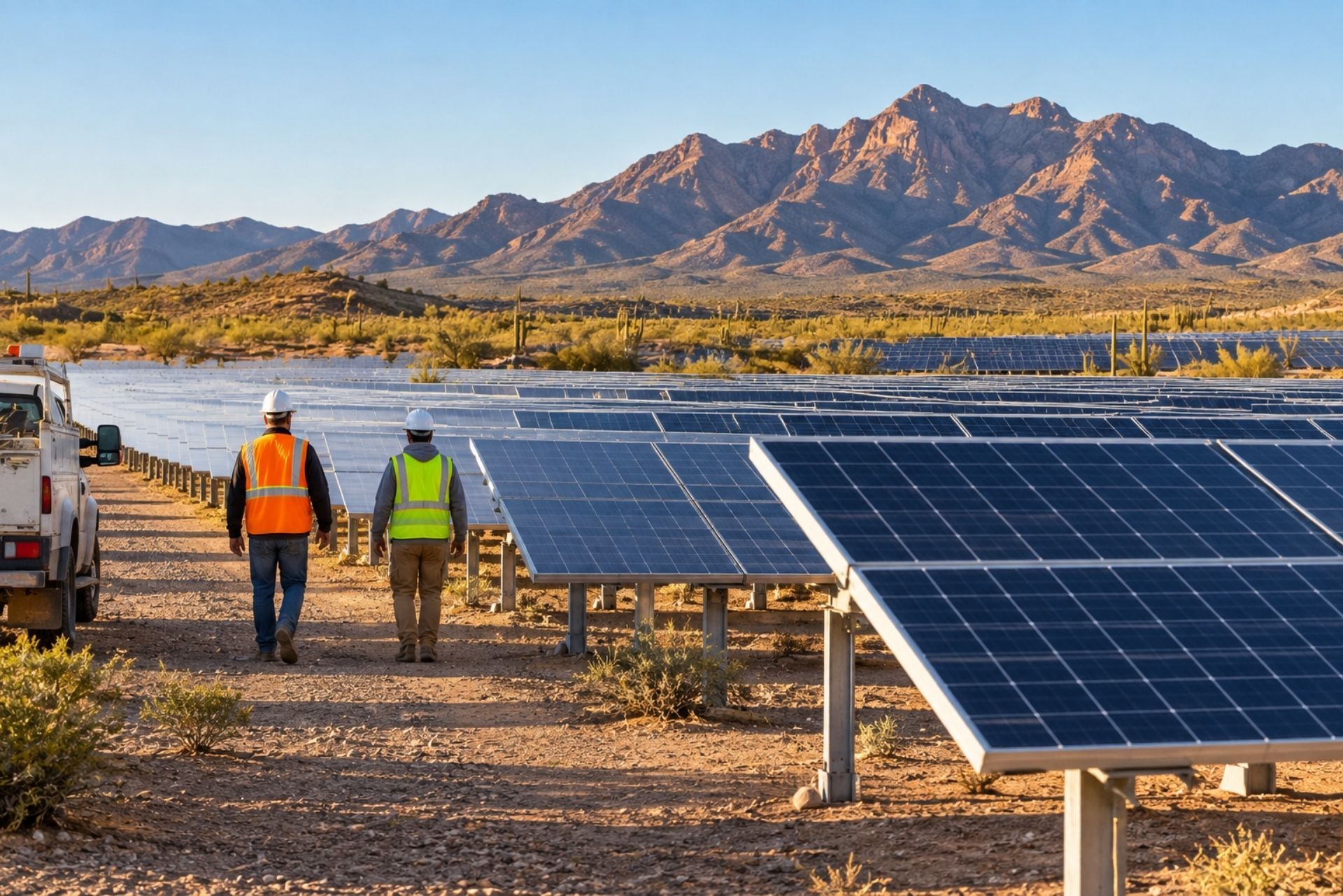
Insurance underwriters reward risk reduction with lower premiums. In Arizona, two areas offer the biggest return on investment: physical hardening of your site and disciplined operations and maintenance practices.
Hardening Infrastructure Against Hail and Wind
Hail-resistant modules rated to withstand larger hailstones (35mm+) cost more upfront but can meaningfully reduce your property insurance premium. Tracker systems with automatic hail-stow functionality, which tilt panels to reduce the impact angle during storms, are becoming a baseline expectation from insurers.
For wind mitigation, torque tube upgrades, reinforced pier foundations, and proper perimeter fencing all signal to underwriters that your site can handle monsoon-force gusts. Some carriers offer premium credits for sites that exceed local building code wind ratings by a meaningful margin.
O&M Requirements for Heat Management
Consistent operations and maintenance documentation does double duty: it keeps your equipment running efficiently and gives your insurer confidence that you're managing heat-related degradation proactively. Thermal imaging inspections at least twice per year catch hotspots before they become fire hazards. Regular inverter servicing, panel cleaning schedules, and vegetation management around the array perimeter all factor into underwriting decisions.
Insurers increasingly ask for O&M contracts as part of the underwriting submission. A site with no formal maintenance program will pay more, sometimes significantly more, than an identical site with a documented O&M plan from a reputable provider.
Common Questions About Arizona Solar Coverage
Frequently Asked Questions
Does my property policy automatically cover hail damage to solar panels? Not always. Many standard commercial property policies sub-limit or exclude hail damage to solar equipment. You'll need to verify that your policy provides full replacement cost coverage for hail events, or add a specific endorsement.
Are dust storms considered a covered peril? Acute damage from a single dust storm event, like a haboob destroying tracker motors, is generally coverable. Gradual abrasion over time typically falls under wear-and-tear exclusions. The distinction matters, so clarify it with your broker.
How does Arizona's regulatory environment affect my coverage needs? Arizona's regulatory picture for renewables remains unsettled. The inconsistent patchwork of regulations has been described as having a deep chilling effect on renewable energy deployment in the state. This uncertainty makes it even more important to carry adequate liability and compliance-related coverage.
Do I need separate coverage for battery storage systems? Yes. Battery energy storage systems carry distinct fire, explosion, and environmental risks that most standard solar policies don't fully address. A standalone BESS policy or a comprehensive endorsement is strongly recommended.
What's a typical deductible for a utility-scale solar farm in Arizona? Deductibles vary widely based on site size, location, and risk mitigation measures. For a $50 million site, you might see property deductibles per occurrence, with separate and sometimes higher deductibles for named windstorm or hail events.
Can I bundle property, BI, and liability into one policy? Some specialized solar insurers offer package policies that combine these coverages. Bundling can simplify administration and sometimes reduce total cost, but make sure each coverage section has adequate limits. Don't sacrifice BI coverage depth just to get a cheaper package price.
Making the Right Choice for Long-Term Protection
Your solar farm insurance program in Arizona needs to reflect the specific hazards your site faces: punishing heat, violent monsoons, abrasive dust, and the ever-present threat of hail. A generic commercial property policy won't cut it for an asset designed to operate for 25-plus years in one of the harshest climates in North America.
Start by working with a broker who specializes in renewable energy insurance, not a generalist who handles solar as a side line. Get quotes from at least three carriers, and compare not just premiums but deductible structures, sub-limits, and exclusions. Invest in physical hardening and documented O&M programs; they'll pay for themselves through lower premiums and fewer claims over the life of your project.
Review your coverage annually. Arizona's climate risks, regulatory environment, and insurance market all shift from year to year. The policy that worked when your site was commissioned may have gaps three years later. Treat your insurance program as a living document, and you'll protect both your equipment and your bottom line for decades to come.
About The Author:
Dax Kastrin
As Founder and Agent at ERM Insurance, I’m committed to helping clients understand and manage risk through clear, straightforward coverage solutions. With professional designations as an Accredited Advisor in Insurance (AAI) and Associate in General Insurance (AINS), I focus on delivering dependable protection and personalized service for every individual and business I work with.
Your Business Insurance Solutions

Workers’ Compensation Insurance
Protect your workers from significant financial losses if they are injured or disabled while performing their duties as an employee.

Cyber Liability Insurance
Safeguard your business against financial losses from data breaches, especially those that involve sensitive customer information and other unforeseen cyber events, like cybercrime.

Directors & Officers Liability
Protect your C-suite officers and board members, as well as the companies they represent if they are the subject of a claim or investigation from their duties.

General Liability Insurance
Guard your business against the cost of claims that can be filed due to bodily injury to a third party, damage to third-party property, lawsuits, and more.

Business Owners Insurance
Reduce the cost of premiums by getting a business owner’s insurance, a coverage plan that combines commercial property insurance and general liability insurance.

Commercial Auto Insurance
Guard your business against financial losses from accidents involving company vehicles. Commercial auto insurance provides for bodily injury liability and property damage.

Commercial Property Insurance
Recover from financial losses involving damage to your physical assets, including furniture, physical building, office space, inventory, landscaping and fencing, signage, and more.

Lessor's Risk Insurance
Get coverage for your rental properties. A lessor’s risk insurance covers financial losses from acts of vandalism, litigation costs for lawsuits, theft of property owned by your tenants, and more.

Product Liability Insurance
Protect your companies from claims made against the goods you provide. This covers injuries caused by malfunctions of products, design defects, and more.
Choose Elemental Risk Management Today
Get a Plan Suited to Your Business
ERM assesses the risks that your company faces, as well as your industry, operations, workforce, and more.
Recover Quickly
With business insurance coverage, you’ll bounce back from adverse events that could have left your business on the brink of bankruptcy.
Avoid Overpaying
Through customized solutions, your business will get adequate coverage without unnecessary costs. We’ll keep premiums cost-effective.
Our Testimonials
Hear from our clients
“We recently changed our business insurance after over 20 years, and we couldn't be happier. We didn't realize how poor the service was, how unresponsive, and slow the service was of our previous carrier. Dax and his team have gone above and beyond to answer every question our business had, to ensure that we had the coverage we needed, and fully understood everything we were getting. Not only did we save money, but we have saved a lot of time with the quick responsiveness of this team. They are exceptional. Would Highly recommend, and provide references."
Laura Harrison
May 2021
"I love working with the ERM crew! They are always super inquisitive and willing to learn/ask questions to provide their clients with the best possible insurance solution. I would definitely recommend them to anyone looking for advice on their current policies and coverage."
Nicole Limpert
May 2021
“Elemental Risk Management has been our insurance agent for 2 years now. They are consistently shopping for us to have the very best quality of coverage, as well as the best rates available. They saved our company over $20,000.00 in premiums our first year doing business with them. They are also quick to respond to any need (COI's, accident reporting, etc.). I recommend the team at ERM very highly!
Ramona Mills
June 2021