Texas Wind Farm Insurance
8:30am - 5:00pm Mon-Fri
Will Reply in 15min*
Over 180+ commercial clients covered
100% customer satisfaction guaranteed
Over 10 years of business insurance experience
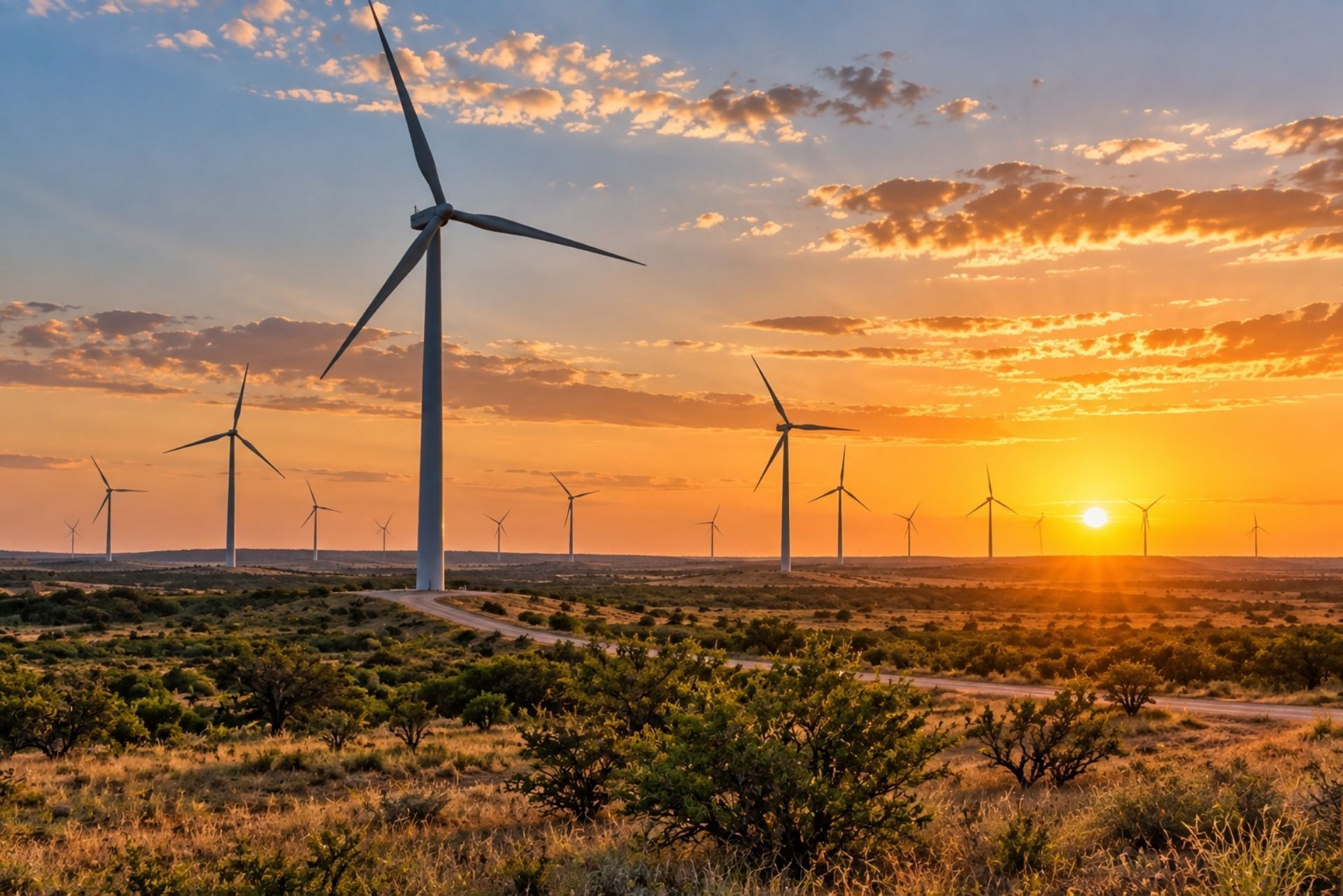
Texas generates more wind energy than any other state, and it's not even close. With over 150 operational wind farms spread across the Panhandle, West Texas, and the Gulf Coast corridor, the state's wind capacity dwarfs that of entire countries. But all that generating power sits squarely in the path of some of North America's most violent weather: tornadoes, hailstorms, hurricanes, and lightning strikes that can knock a turbine offline in seconds. If you own or operate a wind project here, your insurance program isn't just a line item. It's the financial backbone that keeps your investment standing after a spring supercell tears through your site. This guide covers the essential insurance coverages for
Texas wind farms, from tornado and lightning protection to blade failure, gearbox breakdown, business interruption, property, and liability policies. We'll walk through what you actually need, what gaps catch operators off guard, and how to position your project for the best terms in a market that's getting pickier every year.
The Unique Risk Landscape of Texas Wind Energy
Texas wind projects face a combination of threats you won't find in Iowa or the Dakotas. The sheer geographic spread of the state means a single portfolio can be exposed to Gulf hurricanes, Tornado Alley supercells, and Permian Basin dust storms all at once. Insurers know this, and they price accordingly.
Extreme Weather: Tornados, Hail, and Gulf Hurricanes
A tornado doesn't need a direct hit to cause millions in damage. EF1 winds can bend nacelle housings, shear bolts on yaw systems, and send debris into blade surfaces. Hail is an even more frequent culprit: stones as small as two inches can pit blade leading edges badly enough to reduce aerodynamic efficiency by double digits, triggering costly repair campaigns across an entire site.
Gulf hurricanes bring sustained winds that can exceed a turbine's survival envelope. Even a Category 1 storm pushes wind speeds past the 150 mph threshold that most modern turbines are rated to withstand, and storm surge can flood substations and access roads for weeks. Lightning, though, remains the single biggest driver of unplanned outages. It's the primary cause of unplanned downtime for Texas wind farms, contributing to a global turbine protection market projected to reach $9.8 billion in 2026.
Regulatory Requirements and ERCOT Compliance
Insurance needs don't exist in a vacuum. ERCOT's grid rules directly affect your coverage requirements and your exposure to financial penalties. In September 2026, the ERCOT Board approved NPRR 1328, a "Generation Firming Program" that requires wind and solar resources to meet seasonal average generation capabilities. If your farm can't deliver because of an uninsured equipment failure or weather event, you're not just losing revenue: you're potentially facing grid compliance penalties.
Lenders and power purchase agreement (PPA) counterparties also set minimum insurance thresholds. Most project finance deals require property coverage at full replacement value, liability limits of $25 million to $50 million, and business interruption periods of at least 18 to 24 months. Falling short on any of these can trigger a loan default.

By: Dax Kastrin
Founder and Agent at ERM Insurance
Core Insurance Coverages for Wind Farms
Your policy program should be built in layers, each one covering a distinct category of risk. Here's how the essential coverages break down for Texas operators.
Property and Asset Protection
Property insurance covers physical damage to turbines, towers, foundations, substations, transformers, and on-site structures. For a typical 200 MW Texas wind farm, replacement values can run between $320 million and $345 million depending on turbine model and site infrastructure. https://www.wecc.org/sites/default/files/documents/meeting/2025/9 - AffleckL - 2026 Data Preparation Manual.pdf
The critical detail is your deductible structure. Named-storm and hail deductibles in Texas are often set as a percentage of total insured value, not a flat dollar amount. A 2% deductible on a $300 million project means you're absorbing the first $6 million of any hail or hurricane loss out of pocket. https://www.wecc.org/sites/default/files/documents/meeting/2025/9 - AffleckL - 2026 Data Preparation Manual.pdf That's where parametric insurance comes in: Texas operators are increasingly using parametric products as a "deductible buyback" to fill the gap between what they can self-insure and what their property policy actually pays.
General and Excess Liability
General liability protects you against third-party bodily injury and property damage claims. Think of a blade fragment landing on a neighboring ranch, or a subcontractor getting injured during a maintenance campaign. Most Texas wind farms carry standard liability limits, then stack excess liability on top to reach the $25 million to $50 million thresholds that lenders demand. https://www.wecc.org/sites/default/files/documents/meeting/2025/9 - AffleckL - 2026 Data Preparation Manual.pdf
One gap we see regularly: pollution liability isn't included in standard general liability forms. Transformer oil spills, hydraulic fluid leaks, and SF6 gas releases all require a separate environmental policy, which we'll cover below.
Business Interruption and Delay in Startup (DSU)
Business interruption (BI) coverage replaces lost revenue when your farm can't generate power due to a covered peril. The indemnity period, typically 12 to 24 months, determines how long the insurer will pay. For projects still under construction, Delay in Startup (DSU) coverage serves the same function, compensating for revenue you would have earned if the project had come online on schedule.
Here's what's changed recently: BI coverage for renewable assets now frequently includes "contingent" triggers for third-party transmission line damage or grid-related failures. If a tornado takes out the transmission line connecting your farm to the grid, and you didn't cause the damage, contingent BI can still cover your lost production. This is a big deal in Texas, where transmission congestion and outages are already common.
Comparing Coverage Levels for Texas Operators
Comparison Chart: Standard vs. Comprehensive Wind Policy
Not all wind farm policies are built the same. Here's how a standard package stacks up against a comprehensive program:
| Coverage Feature | Standard Policy | Comprehensive Policy |
|---|---|---|
| Property (all-risk) | Named perils only | All-risk including hail, flood, earthquake |
| Named-storm deductible | Standard percentage of TIV | 2% of TIV with parametric buyback https://www.wecc.org/sites/default/files/documents/meeting/2025/9 - AffleckL - 2026 Data Preparation Manual.pdf |
| Business interruption | 12-month indemnity, own damage only | 18-24 months, includes contingent BI https://www.wecc.org/sites/default/files/documents/meeting/2025/9 - AffleckL - 2026 Data Preparation Manual.pdf |
| Delay in Startup | Not included | Included during construction phase |
| Liability | Standard GL only | GL + excess ($25M-$50M tower) https://www.wecc.org/sites/default/files/documents/meeting/2025/9 - AffleckL - 2026 Data Preparation Manual.pdf |
| Equipment breakdown | Limited to manufacturer defect | Full mechanical/electrical breakdown |
| Environmental liability | Excluded | Standalone pollution policy included |
| Cyber coverage | Excluded | SCADA and control system coverage |
The gap between these two levels is where most claims disputes happen. A standard policy might look adequate on paper until a hailstorm damages 80 turbines and you discover your named-peril form doesn't cover the specific damage pattern.
Managing Operational Risks and Maintenance Liabilities
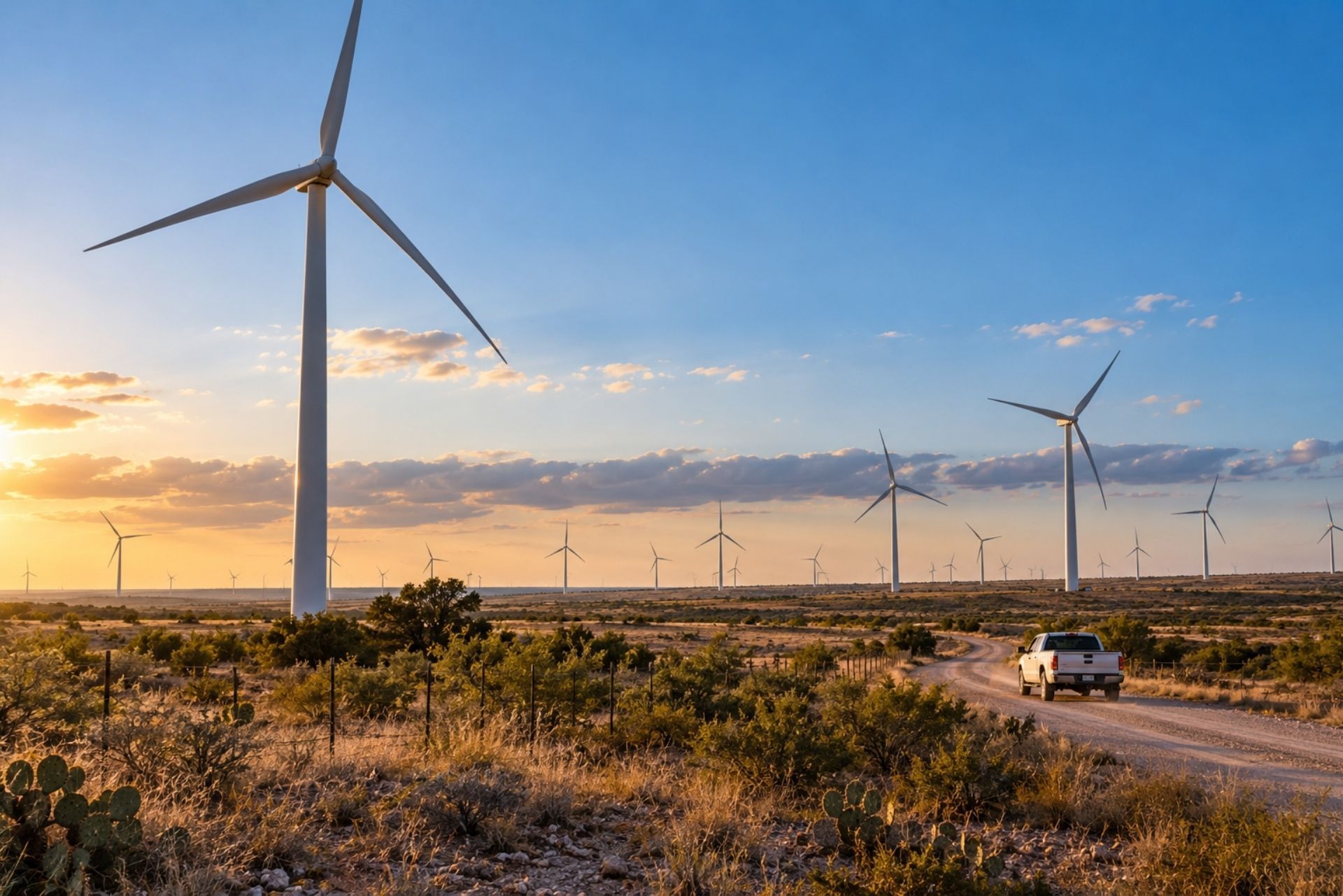
Once a wind farm is operational, the risk profile shifts from construction hazards to long-term mechanical wear and third-party exposures. Your insurance program needs to shift with it.
Equipment Breakdown and Mechanical Failure
Gearbox failures are among the most expensive single-turbine losses in the industry. Replacing a gearbox can cost $300,000 to $800,000 per unit, including labor and crane mobilization. https://www.wecc.org/sites/default/files/documents/meeting/2025/9 - AffleckL - 2026 Data Preparation Manual.pdf Blade failures, whether from manufacturing defects, lightning damage, or leading-edge erosion, run $150,000 to $250,000 per blade. https://www.wecc.org/sites/default/files/documents/meeting/2025/9 - AffleckL - 2026 Data Preparation Manual.pdf
Equipment breakdown insurance (sometimes called machinery breakdown or boiler and machinery coverage) fills the gap that property insurance leaves open. Standard property forms typically exclude mechanical and electrical failure unless it results from an external cause like lightning. Equipment breakdown coverage picks up where property stops: bearing seizures, gearbox wear, electrical surges, and control system malfunctions.
The 2026 insurance market is paying close attention to maintenance records. Underwriters are using portfolio analytics and third-party engineering insights to refine risk selection more precisely than ever. A well-documented preventive maintenance program can meaningfully reduce your premiums, while spotty records will push you into higher-risk tiers.
Environmental and Pollution Liability
Transformers at wind farm substations contain thousands of gallons of mineral oil. A single transformer failure can release oil into soil and groundwater, triggering significant cleanup costs. Hydraulic systems in turbine nacelles use synthetic fluids that carry their own contamination risks.
A standalone pollution liability policy covers cleanup costs, third-party claims, and regulatory fines. It also covers gradual pollution, the slow leak that goes unnoticed for months, which is specifically excluded from general liability forms. If your site is near a waterway, aquifer recharge zone, or agricultural land, this coverage isn't optional.
Common Questions About Texas Wind Insurance
FAQ: How much does wind farm insurance cost in Texas?
Premiums vary widely based on site location, turbine count, age, and claims history. As a rough benchmark, property and BI premiums for a well-maintained 200 MW project typically fall between $1.5 million and $3 million annually. https://www.wecc.org/sites/default/files/documents/meeting/2025/9 - AffleckL - 2026 Data Preparation Manual.pdf The market in 2026 is widening the gap between well-positioned risks and the rest, so strong maintenance documentation and engineering reports can save you hundreds of thousands per year.
FAQ: Does basic property insurance cover lightning strikes?
Usually yes, but with caveats. Lightning is typically a named peril under standard property forms. The catch is that damage to internal electronics, control boards, and SCADA systems from lightning-induced surges may fall under equipment breakdown coverage instead. You need both policies working together to avoid gaps.
FAQ: Do I need extra coverage for the construction phase?
Yes. Builder's risk insurance covers physical damage during construction, and Delay in Startup coverage protects against revenue losses if commissioning is delayed. Most lenders require both before they'll release construction financing. Construction-phase policies also need to account for contractor liability and testing/commissioning risks.
FAQ: Are transmission lines covered under the main policy?
It depends on ownership. If you own the gen-tie line connecting your farm to the grid, it should be scheduled as insured property under your policy. If the line is owned by a utility or third party, your contingent business interruption coverage is what protects you from losses caused by damage to that line.
Making the Right Choice for Your Texas Project
Wind farm insurance in Texas isn't a single policy. It's a layered program that needs to account for tornadoes, lightning, blade and gearbox failures, business interruption, property damage, and liability exposures all at once. The operators who get the best terms are the ones who treat insurance as an active risk management tool, not a box to check once a year.
Start by auditing your current program against the comparison chart above. Identify where your deductibles leave you exposed, whether your BI coverage includes contingent triggers, and whether your equipment breakdown policy actually covers the failure modes that hit Texas turbines most often. Then get your maintenance records, engineering inspections, and loss-control reports organized before you go to market.
If you're developing a new project or renewing an existing program, talk to a broker who specializes in
renewable energy. The difference between a generic commercial policy and a purpose-built wind program can be millions of dollars when a claim hits. Your turbines are built to last 25 years. Your insurance should be built to protect them for every one of those years.
About The Author:
Dax Kastrin
As Founder and Agent at ERM Insurance, I’m committed to helping clients understand and manage risk through clear, straightforward coverage solutions. With professional designations as an Accredited Advisor in Insurance (AAI) and Associate in General Insurance (AINS), I focus on delivering dependable protection and personalized service for every individual and business I work with.
Your Business Insurance Solutions

Workers’ Compensation Insurance
Protect your workers from significant financial losses if they are injured or disabled while performing their duties as an employee.

Cyber Liability Insurance
Safeguard your business against financial losses from data breaches, especially those that involve sensitive customer information and other unforeseen cyber events, like cybercrime.

Directors & Officers Liability
Protect your C-suite officers and board members, as well as the companies they represent if they are the subject of a claim or investigation from their duties.

General Liability Insurance
Guard your business against the cost of claims that can be filed due to bodily injury to a third party, damage to third-party property, lawsuits, and more.

Business Owners Insurance
Reduce the cost of premiums by getting a business owner’s insurance, a coverage plan that combines commercial property insurance and general liability insurance.

Commercial Auto Insurance
Guard your business against financial losses from accidents involving company vehicles. Commercial auto insurance provides for bodily injury liability and property damage.

Commercial Property Insurance
Recover from financial losses involving damage to your physical assets, including furniture, physical building, office space, inventory, landscaping and fencing, signage, and more.

Lessor's Risk Insurance
Get coverage for your rental properties. A lessor’s risk insurance covers financial losses from acts of vandalism, litigation costs for lawsuits, theft of property owned by your tenants, and more.

Product Liability Insurance
Protect your companies from claims made against the goods you provide. This covers injuries caused by malfunctions of products, design defects, and more.
Choose Elemental Risk Management Today
Get a Plan Suited to Your Business
ERM assesses the risks that your company faces, as well as your industry, operations, workforce, and more.
Recover Quickly
With business insurance coverage, you’ll bounce back from adverse events that could have left your business on the brink of bankruptcy.
Avoid Overpaying
Through customized solutions, your business will get adequate coverage without unnecessary costs. We’ll keep premiums cost-effective.
Our Testimonials
Hear from our clients
“We recently changed our business insurance after over 20 years, and we couldn't be happier. We didn't realize how poor the service was, how unresponsive, and slow the service was of our previous carrier. Dax and his team have gone above and beyond to answer every question our business had, to ensure that we had the coverage we needed, and fully understood everything we were getting. Not only did we save money, but we have saved a lot of time with the quick responsiveness of this team. They are exceptional. Would Highly recommend, and provide references."
Laura Harrison
May 2021
"I love working with the ERM crew! They are always super inquisitive and willing to learn/ask questions to provide their clients with the best possible insurance solution. I would definitely recommend them to anyone looking for advice on their current policies and coverage."
Nicole Limpert
May 2021
“Elemental Risk Management has been our insurance agent for 2 years now. They are consistently shopping for us to have the very best quality of coverage, as well as the best rates available. They saved our company over $20,000.00 in premiums our first year doing business with them. They are also quick to respond to any need (COI's, accident reporting, etc.). I recommend the team at ERM very highly!
Ramona Mills
June 2021