EV Charging Station Owner and Operator Insurance
8:30am - 5:00pm Mon-Fri
Will Reply in 15min*
Over 180+ commercial clients covered
100% customer satisfaction guaranteed
Over 10 years of business insurance experience
The EV
charging infrastructure boom isn't slowing down. With the global charging station market
projected to reach $15.92 billion by 2026, thousands of new station owners are entering a space where the insurance playbook is still being written. A single charger malfunction, a vehicle fire, or a stolen cable can wipe out months of revenue, and your standard commercial policy likely won't cover any of it. If you own or operate EV charging equipment, you need insurance designed specifically for the risks you're actually facing. Whether you run a single Level 2 unit behind a
retail shop or manage a network of DC fast chargers across multiple sites, the right coverage protects your hardware, your income, and your liability exposure. Here's what you need to know before your next policy renewal.
Core Risks for EV Charging Station Owners
Owning charging infrastructure means owning a unique set of risks that don't fit neatly into traditional commercial insurance categories. Your stations sit outdoors, handle high-voltage electricity, connect to vehicles worth $40,000 or more, and rely on networked software to process payments and manage sessions. That combination creates exposure across property, liability, and cyber risk categories all at once.
Most station owners we talk to underestimate at least one of these risk areas. The ones who've filed claims wish they hadn't.
Physical Damage and Vandalism
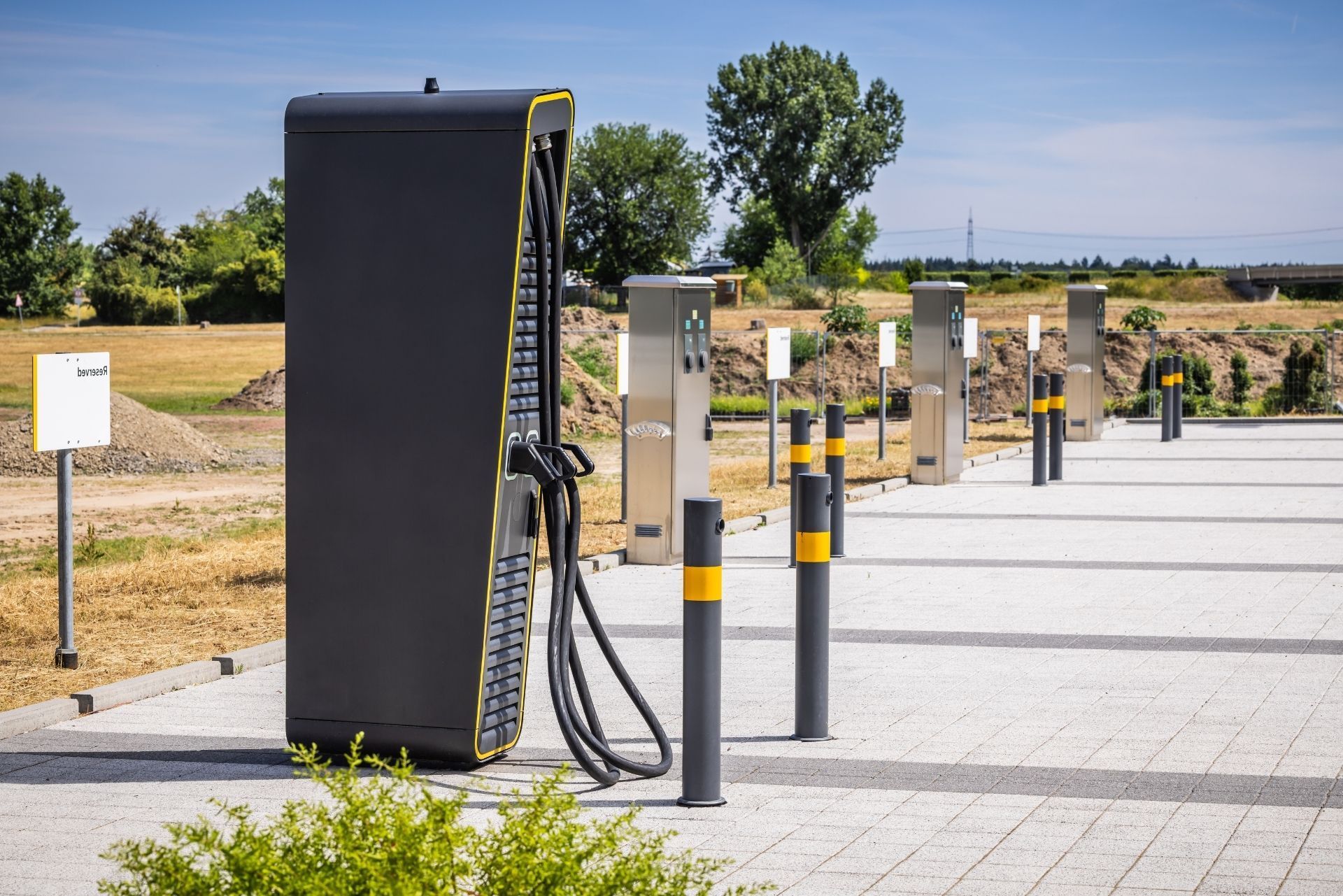
Charging stations are expensive targets sitting in publicly accessible locations. A Level 2 commercial unit typically costs between $3,000 and $7,000 installed, while DC fast chargers can run $50,000 to $175,000 per unit once you factor in electrical upgrades and permitting. That's a lot of capital exposed to weather events, vehicle strikes, and deliberate vandalism.
Copper theft is a real problem. Charging cables contain valuable wiring, and thieves have figured out they can cut them in seconds. A single cable replacement might cost $500 to $1,500, but the downtime and lost revenue add up fast, especially if your station goes offline during peak hours.
Liability for Vehicle Damage and Fire
This is the risk that keeps station operators up at night. If a charger malfunctions and damages a customer's battery, fries an onboard computer, or, in a worst-case scenario, causes a thermal event, you're looking at claims that can easily reach six figures. Lithium-ion battery fires burn hot, burn long, and can spread to adjacent vehicles or structures.
Your liability doesn't end with the vehicle itself. If a fire at your station damages a neighboring business or injures a bystander, those claims stack on top of the vehicle damage. Standard general liability policies often exclude damage caused by the "products" you provide, which includes the electricity flowing through your charger.
Cybersecurity and Network Failures
Most modern charging stations are internet-connected, running payment processing software and communicating with network management platforms. That connectivity creates cyber exposure. A data breach affecting customer payment information triggers notification requirements and potential regulatory fines. A network outage that takes your stations offline means lost revenue and frustrated customers.
Some operators have also seen their stations used as entry points for attacks on connected building systems. If your chargers share a network with other building infrastructure, a compromise at the charger level can cascade into broader liability.

By: Dax Kastrin
Founder and Agent at ERM Insurance
Not all policies are built the same, and the two most commonly discussed options for station owners, general liability and inland marine, cover very different things. Understanding where each one applies helps you avoid gaps.
Comparison Chart: General Liability vs. Inland Marine
| Feature | General Liability | Inland Marine |
|---|---|---|
| What it covers | Bodily injury and property damage to third parties | Physical damage to your equipment |
| Typical limit | $1M per occurrence / $2M aggregate | Scheduled value of equipment |
| Covers charger malfunction injuries | Yes, if not excluded | No |
| Covers theft of charging cables | No | Yes |
| Covers weather damage to units | No | Yes |
| Covers customer vehicle damage | Possibly, check exclusions | No |
| Average annual cost | $800 - $2,500 | $500 - $1,800 |
The key takeaway here: you likely need both. General liability handles the "someone got hurt or their property got damaged" scenarios. Inland marine covers your own equipment when it's damaged, stolen, or destroyed. Neither one alone gives you complete protection, and specialized insurers focused on EV infrastructure are increasingly offering bundled packages that address both sides.
One common mistake we see is operators assuming their landlord's property insurance covers their installed chargers. It almost never does. Chargers you own are your responsibility to insure, even if they're bolted to someone else's building.
Specialized Policies for Station Operators
Beyond the basics, two specialized coverage types deserve serious attention from anyone running commercial charging operations.
Equipment Breakdown Insurance
Standard property and inland marine policies cover external damage, things like storms, theft, and vandalism. But they typically exclude internal mechanical or electrical failure. Equipment breakdown insurance (sometimes called boiler and machinery coverage) fills that gap.
A power surge that fries your charger's inverter board? That's an equipment breakdown claim. A software glitch that causes a unit to overcharge and damage its own components? Same category. Given that commercial EV station installations involve significant electrical infrastructure, including transformers, switchgear, and dedicated circuits, the potential for internal failure is real.
This coverage also typically includes spoilage of business income, meaning if your charger goes down due to a covered breakdown, you can recover the revenue you would have earned during the repair period. For operators running high-traffic DC fast-charging sites, even a few days of downtime can mean thousands in lost income.
Environmental and Pollution Liability
This one surprises a lot of station owners. EV chargers don't burn fossil fuels, so why would you need pollution coverage? The answer lies in what's inside the equipment and what happens when things go wrong.
Battery thermal events can release toxic gases and hazardous materials. If a vehicle catches fire at your station and the runoff contaminates soil or enters a storm drain, you could face environmental cleanup costs and regulatory penalties. Transformer oil spills from associated electrical equipment create similar exposure.
Operators in states like Florida face additional environmental scrutiny due to proximity to sensitive ecosystems and strict state environmental regulations. Standard general liability policies almost universally exclude pollution-related claims, making a standalone environmental policy essential for operators in high-risk locations.
Common Questions About EV Insurance
Does my standard business policy cover charging stations?
Almost certainly not in any meaningful way. Most commercial property policies exclude outdoor electronic equipment or cap coverage at a few thousand dollars. Your general liability policy may cover slip-and-fall incidents near the charger, but it likely excludes damage caused by the charging process itself. You need endorsements or standalone policies written specifically for charging infrastructure.
What happens if a customer's car catches fire while charging?
Your general liability policy is the first line of defense, but only if it doesn't contain an exclusion for damage arising from your "products or completed operations." If the fire spreads to other vehicles or structures, claims can multiply quickly. Carriers like those specializing in climate technology risks are developing policies that specifically address EV fire scenarios, including defense costs and third-party property damage.
Are charging cables covered if they are stolen or cut?
Yes, but only under an inland marine or equipment floater policy. General liability won't pay to replace your own property. Make sure your inland marine policy lists cables as scheduled items or covers them under a blanket equipment limit. Some policies also cover the cost of temporary replacement equipment while yours is being repaired.
How much does EV station insurance usually cost?
For a small operation with two to four Level 2 chargers, expect to pay $1,500 to $4,000 per year for a reasonable coverage package that includes general liability, inland marine, and equipment breakdown. Larger networks with DC fast chargers can see premiums of $8,000 to $25,000 or more annually, depending on the number of units, location, and claims history. Installation and equipment costs directly influence your insured values and therefore your premiums.
Do I need extra coverage for fast-charging stations?
Yes. DC fast chargers operate at much higher voltages and amperages than Level 2 units, which increases both the likelihood and severity of potential incidents. Insurers view fast-charging equipment as higher risk, and your policy limits should reflect the greater replacement cost of these units. If you're adding fast chargers to an existing site, notify your insurer before installation, not after. Failing to update your policy could void coverage entirely.
The Bottom Line for Your Infrastructure Investment
Insurance for EV charging station owners and operators isn't optional, and it isn't simple. The risks span property damage, third-party liability, equipment failure, cyber exposure, and environmental contamination. No single policy covers all of it, and the standard commercial coverage you might already carry almost certainly leaves major gaps.
Start by auditing your current policies against the specific risks outlined above. Talk to a broker who understands charging infrastructure, not just general commercial insurance. Ask about bundled programs designed for EV operators, and make sure your coverage limits reflect the actual replacement cost of your equipment, not just the purchase price.
The EV charging market is growing fast, and so is the claims data insurers use to price these policies. Locking in coverage now, while your claims history is clean, puts you in a stronger position than waiting until after your first incident. Your charging stations represent a significant capital investment. Protect them like one.
About The Author:
Dax Kastrin
As Founder and Agent at ERM Insurance, I’m committed to helping clients understand and manage risk through clear, straightforward coverage solutions. With professional designations as an Accredited Advisor in Insurance (AAI) and Associate in General Insurance (AINS), I focus on delivering dependable protection and personalized service for every individual and business I work with.
Your Business Insurance Solutions

Workers’ Compensation Insurance
Protect your workers from significant financial losses if they are injured or disabled while performing their duties as an employee.

Cyber Liability Insurance
Safeguard your business against financial losses from data breaches, especially those that involve sensitive customer information and other unforeseen cyber events, like cybercrime.

Directors & Officers Liability
Protect your C-suite officers and board members, as well as the companies they represent if they are the subject of a claim or investigation from their duties.

General Liability Insurance
Guard your business against the cost of claims that can be filed due to bodily injury to a third party, damage to third-party property, lawsuits, and more.

Business Owners Insurance
Reduce the cost of premiums by getting a business owner’s insurance, a coverage plan that combines commercial property insurance and general liability insurance.

Commercial Auto Insurance
Guard your business against financial losses from accidents involving company vehicles. Commercial auto insurance provides for bodily injury liability and property damage.

Commercial Property Insurance
Recover from financial losses involving damage to your physical assets, including furniture, physical building, office space, inventory, landscaping and fencing, signage, and more.

Lessor's Risk Insurance
Get coverage for your rental properties. A lessor’s risk insurance covers financial losses from acts of vandalism, litigation costs for lawsuits, theft of property owned by your tenants, and more.

Product Liability Insurance
Protect your companies from claims made against the goods you provide. This covers injuries caused by malfunctions of products, design defects, and more.
Choose Elemental Risk Management Today
Get a Plan Suited to Your Business
ERM assesses the risks that your company faces, as well as your industry, operations, workforce, and more.
Recover Quickly
With business insurance coverage, you’ll bounce back from adverse events that could have left your business on the brink of bankruptcy.
Avoid Overpaying
Through customized solutions, your business will get adequate coverage without unnecessary costs. We’ll keep premiums cost-effective.
Our Testimonials
Hear from our clients
“We recently changed our business insurance after over 20 years, and we couldn't be happier. We didn't realize how poor the service was, how unresponsive, and slow the service was of our previous carrier. Dax and his team have gone above and beyond to answer every question our business had, to ensure that we had the coverage we needed, and fully understood everything we were getting. Not only did we save money, but we have saved a lot of time with the quick responsiveness of this team. They are exceptional. Would Highly recommend, and provide references."
Laura Harrison
May 2021
"I love working with the ERM crew! They are always super inquisitive and willing to learn/ask questions to provide their clients with the best possible insurance solution. I would definitely recommend them to anyone looking for advice on their current policies and coverage."
Nicole Limpert
May 2021
“Elemental Risk Management has been our insurance agent for 2 years now. They are consistently shopping for us to have the very best quality of coverage, as well as the best rates available. They saved our company over $20,000.00 in premiums our first year doing business with them. They are also quick to respond to any need (COI's, accident reporting, etc.). I recommend the team at ERM very highly!
Ramona Mills
June 2021