California Commercial Auto Insurance
8:30am - 5:00pm Mon-Fri
Will Reply in 15min*
Over 180+ commercial clients covered
100% customer satisfaction guaranteed
Over 10 years of business insurance experience
A single rear-end collision at a delivery stop can cost a California business $150,000 or more once you factor in medical bills, vehicle repair, lost wages, and legal fees. If your driver was in a company truck, or even their own car running a work errand, your business is likely on the hook. That's the reality for thousands of small and mid-size companies operating vehicles across the state.
California's commercial auto insurance requirements shifted significantly in 2025, and the ripple effects are still shaping policy pricing and coverage decisions in 2026. Whether you own a single work van or manage a fleet of fifty trucks, understanding your obligations and options isn't just smart planning, it's a legal necessity. This guide covers liability limits, hired and non-owned vehicle coverage, fleet management, driver requirements, and the cost factors that matter most for California businesses.
California Commercial Auto Insurance Mandates and Liability Limits
Every business that operates vehicles in California must carry auto liability insurance. The state doesn't care if it's a box truck or a sedan used for client meetings. If a vehicle serves a business purpose, commercial coverage is required.
Minimum State Requirements vs. Recommended Protection
California's mandatory minimums increased to 30/60/15 as of January 2025, meaning $30,000 per person for bodily injury, $60,000 per accident for bodily injury, and $15,000 for property damage. These numbers replaced the old 15/30/5 minimums that had been in place for decades. The jump was overdue, but the new floors are still dangerously low for most businesses.
A single hospitalization after a serious crash can blow past $30,000 in days. Most insurance professionals recommend commercial policies with limits of at least $500,000 or $1 million combined single limit (CSL). If your business has contracts with general contractors, property managers, or government agencies, they'll often require $1 million CSL as a condition of the job.
Bodily Injury and Property Damage Scenarios
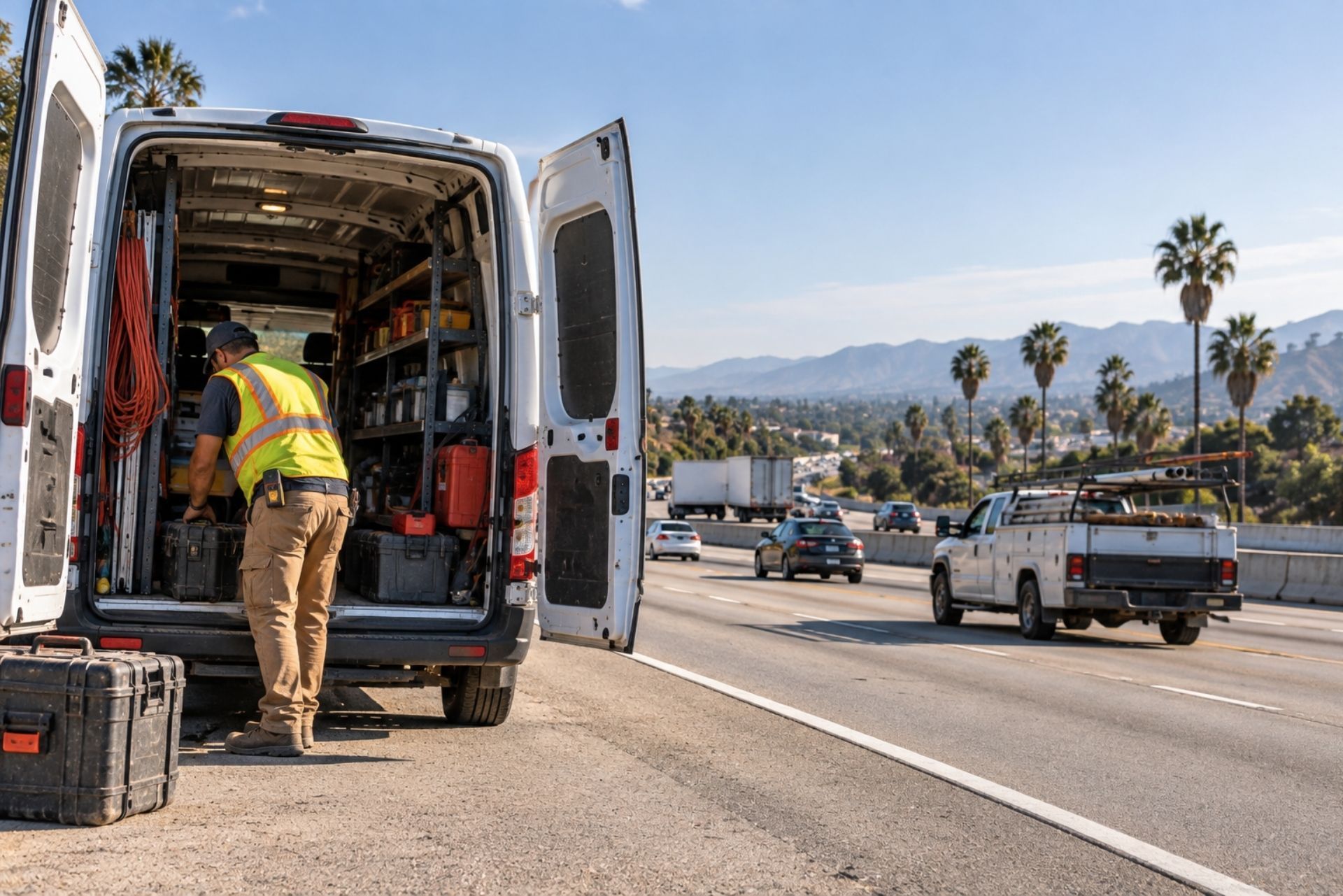
Picture one of your drivers running a red light and T-boning a car carrying two passengers. Both need surgery. The at-fault claim could easily reach $200,000 to $400,000. With only the state minimum of $60,000 per accident, your business would owe the remaining balance out of pocket, and a lawsuit would almost certainly follow.
Property damage works the same way. Backing a
work truck into a storefront or striking a parked Tesla can generate repair bills that dwarf the $15,000 minimum. Carrying higher
property damage limits, typically $50,000 to $100,000, costs relatively little on a
commercial policy.
Comparison: Personal vs. Commercial Liability Limits
| Feature | Personal Auto Policy | Commercial Auto Policy |
|---|---|---|
| Typical Liability Limit | 30/60/15 (state minimum) | $500K to $1M CSL |
| Covers Business Use? | No, most exclude it | Yes, primary purpose |
| Hired/Non-Owned Vehicles | Not available | Available as endorsement |
| Multiple Drivers/Vehicles | Limited | Built for fleets |
| Cargo/Equipment Coverage | Not included | Available |
A personal auto policy will almost always deny a claim if the vehicle was being used for business at the time of the accident. We've seen this happen to contractors, real estate agents, and delivery drivers who assumed their personal coverage would transfer. It doesn't.

By: Dax Kastrin
Founder and Agent at ERM Insurance
Hired and Non-Owned Auto (HNOA) Coverage Explained
Not every business owns its vehicles. Plenty of companies rely on employees driving their own cars, renting vehicles for trips, or leasing equipment seasonally. That's exactly where hired and non-owned auto coverage fills a critical gap.
Protecting Employees Using Personal Vehicles for Work
If your employee causes an accident while driving their personal car on a work errand, say picking up supplies or visiting a client, the injured party can sue your business directly. The employee's personal insurance is primary, but if their limits aren't enough (and they often aren't), your company faces the excess liability.
HNOA coverage acts as a secondary layer. It picks up where the employee's personal policy leaves off, protecting your business from lawsuits that exceed their individual limits. For companies with sales teams, consultants, or field technicians who use personal vehicles regularly, this coverage isn't optional in practice, even if it's optional on paper.
Liability for Rental Cars and Leased Equipment
The "hired auto" portion of HNOA covers vehicles your business rents or leases on a short-term basis. Renting a cargo van for a weekend job or leasing a truck for a seasonal project creates liability exposure that your standard commercial policy won't cover unless those specific vehicles are scheduled on the policy. HNOA fills that gap without requiring you to add and remove vehicles constantly. Premiums for HNOA endorsements are
often modest relative to the protection, typically running a few hundred dollars annually for small businesses.
Managing California Commercial Fleets and Driver Standards
Running a fleet in California means dealing with insurance carriers, the DMV, and state labor regulations simultaneously. The more vehicles and drivers you have, the more structure you need around risk management.
Fleet Size Definitions and Insurance Implications
Most insurers define a "fleet" as five or more vehicles, though some start fleet pricing at three. Fleet policies bundle all vehicles under one policy with a single renewal date, which simplifies administration and often unlocks volume discounts. Businesses with fewer than five vehicles typically write each on a scheduled auto policy.
Fleet size also affects your experience modification factor. Carriers track your claims history across the fleet, and a string of at-fault accidents will push your premiums up sharply at renewal. One client we worked with saw a 40% rate increase after three preventable backing accidents in a single policy year.
California DMV Employer Pull Notice (EPN) Program
California requires employers who direct employees to drive as part of their job to enroll in the DMV's Employer Pull Notice program. The EPN program automatically notifies you when a driver's license is suspended, revoked, or restricted, or when they receive certain convictions.
This isn't optional for most commercial operations. If you have drivers operating vehicles that require a commercial license, or if driving is a regular job duty, enrollment is mandatory. The program costs $2 per driver annually, which is a negligible expense compared to the liability of unknowingly employing a driver with a suspended license.
MVR Requirements for Commercial Drivers
Beyond the EPN program, most insurance carriers require Motor Vehicle Reports (MVRs) for every listed driver at policy inception and renewal. An MVR shows the driver's accident and violation history over the past three to five years. Carriers use this data to assess risk and set premiums.
Drivers with DUIs, reckless driving convictions, or multiple at-fault accidents will either be excluded from coverage or trigger significant surcharges. Some carriers won't write a policy at all if more than a certain percentage of your drivers have poor records. Running MVRs before hiring is a best practice that commercial employers in California should treat as standard procedure.
Factors Influencing Commercial Auto Costs in California
California consistently ranks among the most expensive states for commercial auto coverage. Several factors drive this reality.
Your industry matters enormously. A landscaping company with trucks hauling trailers faces higher premiums than a consulting firm insuring sedans. The type of vehicle, its weight, cargo, and radius of operation all factor into the rate. A box truck making local deliveries within 50 miles costs less to insure than the same truck running routes across the state.
Driver records are the single biggest controllable factor. Clean MVRs across your team can save you 15% to 25% compared to a fleet with multiple violations. Claims history follows you too: carriers look at three to five years of loss runs when quoting.
The broader market is also a factor. Commercial auto insurance rates in California have been climbing steadily due to rising repair costs, medical inflation, and nuclear verdicts. Businesses should expect renewal increases of 5% to 15% in 2026, with higher jumps for accounts that have had claims. Shopping your policy every two to three years, or working with an independent agent who can access multiple carriers, is one of the most effective ways to control costs.
Common Questions About California Business Auto Policies
Do I need commercial insurance if I just use my car for sales calls?
Yes, in most cases. If you're driving to meet clients, deliver products, or perform any work-related task, your personal auto insurer can deny a claim. A commercial policy or at minimum an HNOA endorsement on your business insurance protects you.
How much does a typical policy cost for a small business in CA?
Small businesses with one to three vehicles commonly pay between $1,800 and $4,500 per vehicle annually, though rates vary widely. A plumber's work van costs more to insure than a consultant's sedan. Your location, driver records, and claims history all shift the number.
Will my personal insurance cover a crash while I'm working?
Almost certainly not. Personal auto policies contain business-use exclusions. If the insurer determines you were on a work errand, they can deny the entire claim, leaving you personally liable.
What is the difference between split limits and combined single limits?
Split limits separate coverage into per-person injury, per-accident injury, and property damage (like the 30/60/15 minimum). Combined single limit (CSL) pools the entire amount into one bucket that applies to any combination of injuries and property damage per accident. CSL policies are simpler and often preferred for commercial accounts.
Does my policy cover tools and equipment inside the van?
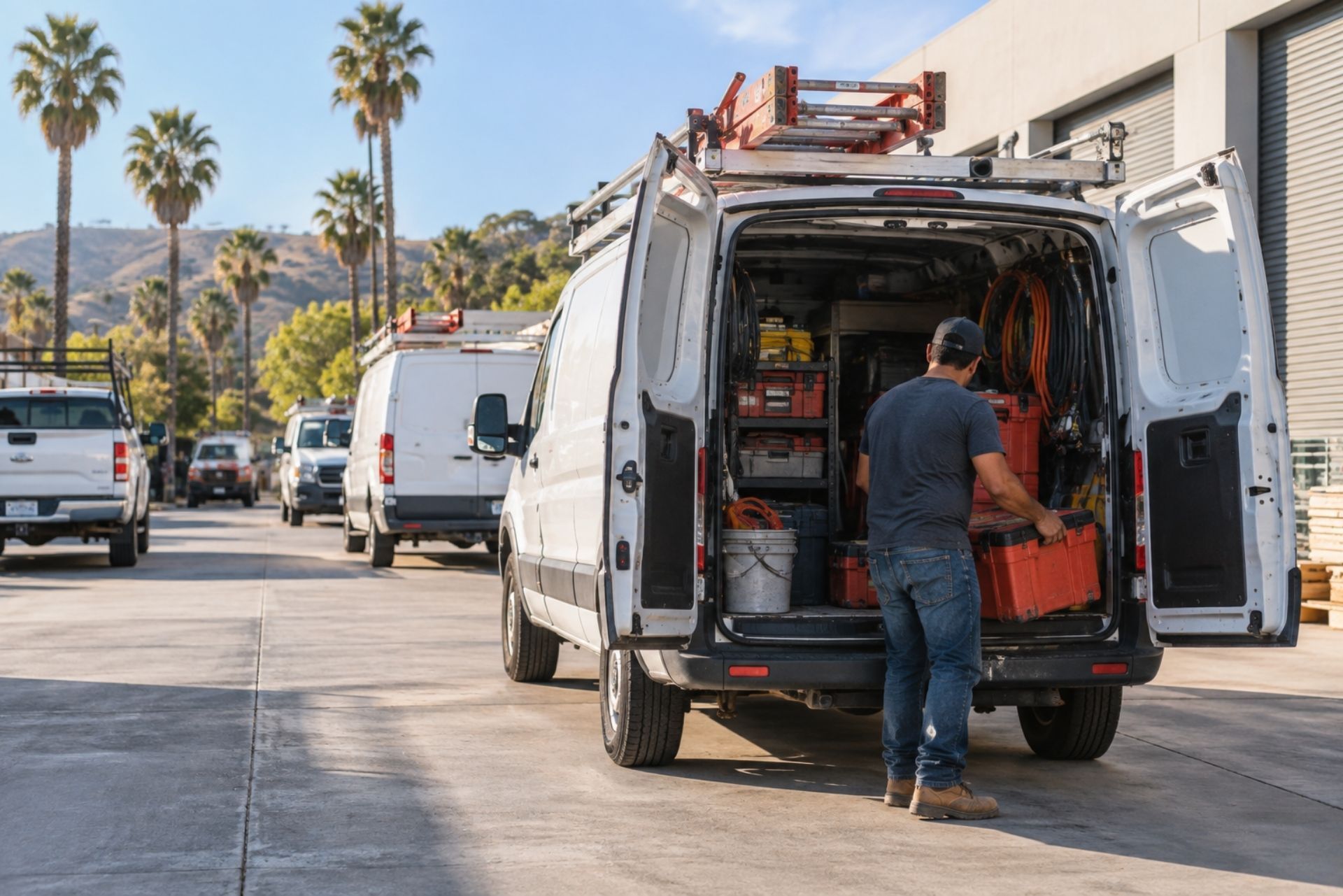
Standard commercial auto policies cover the vehicle itself, not its contents. Tools, materials, and equipment stored inside typically require an inland marine policy or a tools and equipment floater. This is one of the most common coverage gaps we see with contractors.
Making the Right Choice for Your Fleet
Getting commercial auto insurance right in California requires more than meeting the state's 30/60/15 minimums. Those floors exist to keep uninsured vehicles off the road, not to protect your business from a serious claim. The real work is matching your coverage to your actual risk: the vehicles you operate, the drivers behind the wheel, and the routes they run.
Start by auditing your current exposure. Do employees drive personal vehicles for work? You need HNOA. Are you enrolled in the EPN program? If not, you're out of compliance. Are your liability limits high enough to survive a six-figure lawsuit without threatening your business assets?
Get quotes from at least three carriers or work with an independent agent who can do this for you. Compare not just price but coverage terms, deductibles, and the carrier's claims handling reputation. Review your policy annually, update your driver roster, and pull MVRs before every renewal. The businesses that treat their auto insurance as an active risk management tool, rather than a checkbox, are the ones that avoid the worst surprises.
About The Author:
Dax Kastrin
As Founder and Agent at ERM Insurance, I’m committed to helping clients understand and manage risk through clear, straightforward coverage solutions. With professional designations as an Accredited Advisor in Insurance (AAI) and Associate in General Insurance (AINS), I focus on delivering dependable protection and personalized service for every individual and business I work with.
Your Business Insurance Solutions

Workers’ Compensation Insurance
Protect your workers from significant financial losses if they are injured or disabled while performing their duties as an employee.

Cyber Liability Insurance
Safeguard your business against financial losses from data breaches, especially those that involve sensitive customer information and other unforeseen cyber events, like cybercrime.

Directors & Officers Liability
Protect your C-suite officers and board members, as well as the companies they represent if they are the subject of a claim or investigation from their duties.

General Liability Insurance
Guard your business against the cost of claims that can be filed due to bodily injury to a third party, damage to third-party property, lawsuits, and more.

Business Owners Insurance
Reduce the cost of premiums by getting a business owner’s insurance, a coverage plan that combines commercial property insurance and general liability insurance.

Commercial Auto Insurance
Guard your business against financial losses from accidents involving company vehicles. Commercial auto insurance provides for bodily injury liability and property damage.

Commercial Property Insurance
Recover from financial losses involving damage to your physical assets, including furniture, physical building, office space, inventory, landscaping and fencing, signage, and more.
Lessor's Risk Insurance
Get coverage for your rental properties. A lessor’s risk insurance covers financial losses from acts of vandalism, litigation costs for lawsuits, theft of property owned by your tenants, and more.

Product Liability Insurance
Protect your companies from claims made against the goods you provide. This covers injuries caused by malfunctions of products, design defects, and more.
Choose Elemental Risk Management Today
Get a Plan Suited to Your Business
ERM assesses the risks that your company faces, as well as your industry, operations, workforce, and more.
Recover Quickly
With business insurance coverage, you’ll bounce back from adverse events that could have left your business on the brink of bankruptcy.
Avoid Overpaying
Through customized solutions, your business will get adequate coverage without unnecessary costs. We’ll keep premiums cost-effective.
Our Testimonials
Hear from our clients
“We recently changed our business insurance after over 20 years, and we couldn't be happier. We didn't realize how poor the service was, how unresponsive, and slow the service was of our previous carrier. Dax and his team have gone above and beyond to answer every question our business had, to ensure that we had the coverage we needed, and fully understood everything we were getting. Not only did we save money, but we have saved a lot of time with the quick responsiveness of this team. They are exceptional. Would Highly recommend, and provide references."
Laura Harrison
May 2021
"I love working with the ERM crew! They are always super inquisitive and willing to learn/ask questions to provide their clients with the best possible insurance solution. I would definitely recommend them to anyone looking for advice on their current policies and coverage."
Nicole Limpert
May 2021
“Elemental Risk Management has been our insurance agent for 2 years now. They are consistently shopping for us to have the very best quality of coverage, as well as the best rates available. They saved our company over $20,000.00 in premiums our first year doing business with them. They are also quick to respond to any need (COI's, accident reporting, etc.). I recommend the team at ERM very highly!
Ramona Mills
June 2021