Tow Truck Insurance in NM, TX, and UT
8:30am - 5:00pm Mon-Fri
Will Reply in 15min*
Over 180+ commercial clients covered
100% customer satisfaction guaranteed
Over 10 years of business insurance experience
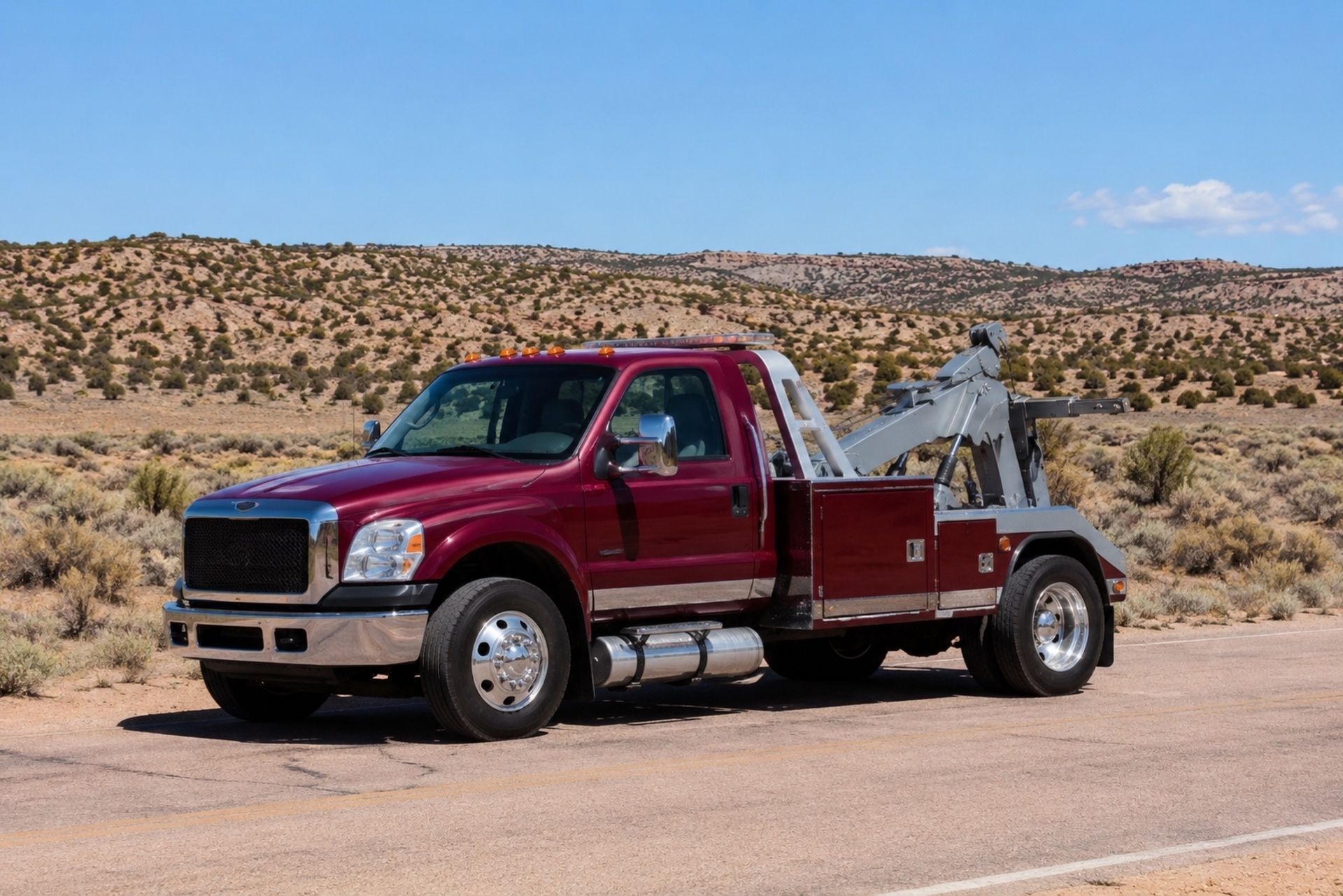
Running a towing operation across the Southwest means dealing with three different state insurance frameworks, each with its own minimum limits, licensing boards, and enforcement quirks. A truck that's legal in El Paso might not meet requirements in Albuquerque or Salt Lake City, and the cost difference between states can be significant. Whether you're expanding into a neighboring state or just getting your first flatbed on the road, understanding tow truck insurance costs and coverage requirements in New Mexico, Utah, and Texas is the first step toward protecting your business and staying compliant. National premiums in 2026
range from $450 to over $2,000 per month per truck, and your exact number depends heavily on where you operate, what you tow, and how much risk you carry. The three-state region we're covering here has some of the widest premium variation in the country, driven by differences in litigation trends, terrain, and regulatory oversight. This guide breaks down the core coverages every towing company needs, the specific rules in NM, UT, and TX, and the factors that push your premiums up or down.
Core Insurance Requirements for Towing Businesses
Every towing company, regardless of state, needs a foundation of coverage types that address the unique risks of the business. You're not just driving a truck; you're hauling someone else's vehicle, often storing it on your lot, and operating heavy equipment on busy highways. That combination creates liability exposure most standard commercial auto policies don't cover.
Liability and Physical Damage Coverage
Commercial auto liability is the baseline. It covers bodily injury and property damage you cause to others while operating your tow truck. Every state requires it, though the minimum limits vary. Physical damage coverage protects your own truck from collision, theft, vandalism, and weather events. For a wrecker or flatbed worth $80,000 to $150,000, skipping physical damage coverage is a gamble most owners can't afford.
General liability insurance is the other essential piece. It covers injuries or damage that happen off the road, like a customer slipping on your lot or an employee damaging a client's property during a hookup. Most motor clubs and municipal contracts require $1 million per occurrence in general liability before they'll add you to their rotation list.
On-Hook and Garagekeepers Insurance
On-hook towing insurance is specific to this industry. It covers the vehicle you're transporting if it's damaged while attached to your truck. Standard commercial auto won't pay for a customer's car that gets wrecked during a tow. On-hook coverage typically costs between $100 and $300 per month per truck, depending on your per-vehicle limit and deductible.
Garagekeepers insurance picks up where on-hook leaves off. Once a vehicle is parked on your lot or inside your shop, garagekeepers covers it against fire, theft, vandalism, and collision. If you store vehicles overnight or hold them for auctions, this coverage is non-negotiable. Premiums for garagekeepers policies depend on lot size, security features, and the number of vehicles stored, but most small operators pay $1,500 to $4,000 annually.

By: Dax Kastrin
Founder and Agent at ERM Insurance
State-Specific Rules in New Mexico, Utah, and Texas
Each of these three states has a different regulatory body overseeing towing operations, and the insurance requirements reflect local priorities. Knowing the differences matters if you operate across state lines.
New Mexico PRC Requirements
New Mexico regulates towing companies through the Public Regulation Commission (PRC). Nonconsensual tows, like those initiated by law enforcement or property owners, face the strictest oversight. The state requires minimum liability limits of $300,000 combined single limit for most towing operators, though some municipal contracts push that to $500,000 or higher.
New Mexico's towing laws also include specific consumer protection provisions around storage fees, release procedures, and signage requirements. Violating these can result in fines and license suspension. Your insurance agent should understand these rules because a coverage gap during a disputed tow can turn into a costly claim fast.
Utah UDOT and Local Regulations
Utah's Department of Transportation (UDOT) manages the state's highway rotation list, which is how most towing companies get their bread-and-butter calls. To qualify, you need a minimum of $750,000 in combined single limit liability, which is significantly higher than New Mexico's floor. UDOT also requires on-hook coverage and proof of workers' compensation insurance.
Local municipalities in Utah sometimes add their own requirements on top of UDOT's standards. Salt Lake City, for example, has its own towing ordinance with additional insurance documentation and vehicle inspection rules. If you're running trucks in multiple Utah jurisdictions, confirm your policy meets the highest applicable standard, not just the state minimum.
Texas TDLR Licensing and Limits
Texas regulates towing through the Texas Department of Licensing and Regulation (TDLR). Every tow truck operator needs a TDLR license, and insurance is a prerequisite. The state minimum for liability is $300,000 combined single limit for nonconsensual tows and $500,000 for vehicles stored at a vehicle storage facility.
Texas is also one of the most expensive states for commercial auto insurance due to its
aggressive litigation environment in truck accident cases. Nuclear verdicts, where juries award multi-million-dollar damages, have pushed carriers to
raise premiums across the board. Recent legislative efforts have
attempted to address some of these cost drivers, but the impact on towing insurance rates remains to be seen. If you operate in Texas, carrying only the state minimum is risky; most experienced operators carry $1 million in liability.
Comparing State Minimums and Recommended Limits
Here's a side-by-side look at what each state requires versus what we'd recommend for a typical two- to five-truck towing operation:
| Coverage Type | New Mexico Minimum | Utah Minimum | Texas Minimum | Recommended |
|---|---|---|---|---|
| Liability (CSL) | $300,000 | $750,000 | $300,000-$500,000 | $1,000,000 |
| On-Hook | Not state-mandated | Required for UDOT | Not state-mandated | $100,000-$150,000 per vehicle |
| Garagekeepers | Not state-mandated | Not state-mandated | Required for VSFs | $100,000-$250,000 |
| Physical Damage | Not state-mandated | Not state-mandated | Not state-mandated | Actual cash value of truck |
| Workers' Comp | Required (3+ employees) | Required | Required | Always carry it |
The gap between state minimums and recommended limits isn't about being overly cautious. It's about the real cost of claims. A single serious highway accident involving a loaded flatbed can generate $500,000 or more in damages before legal fees. The
Texas towing industry alone generates billions in annual revenue, and the claims that come with that volume are substantial.
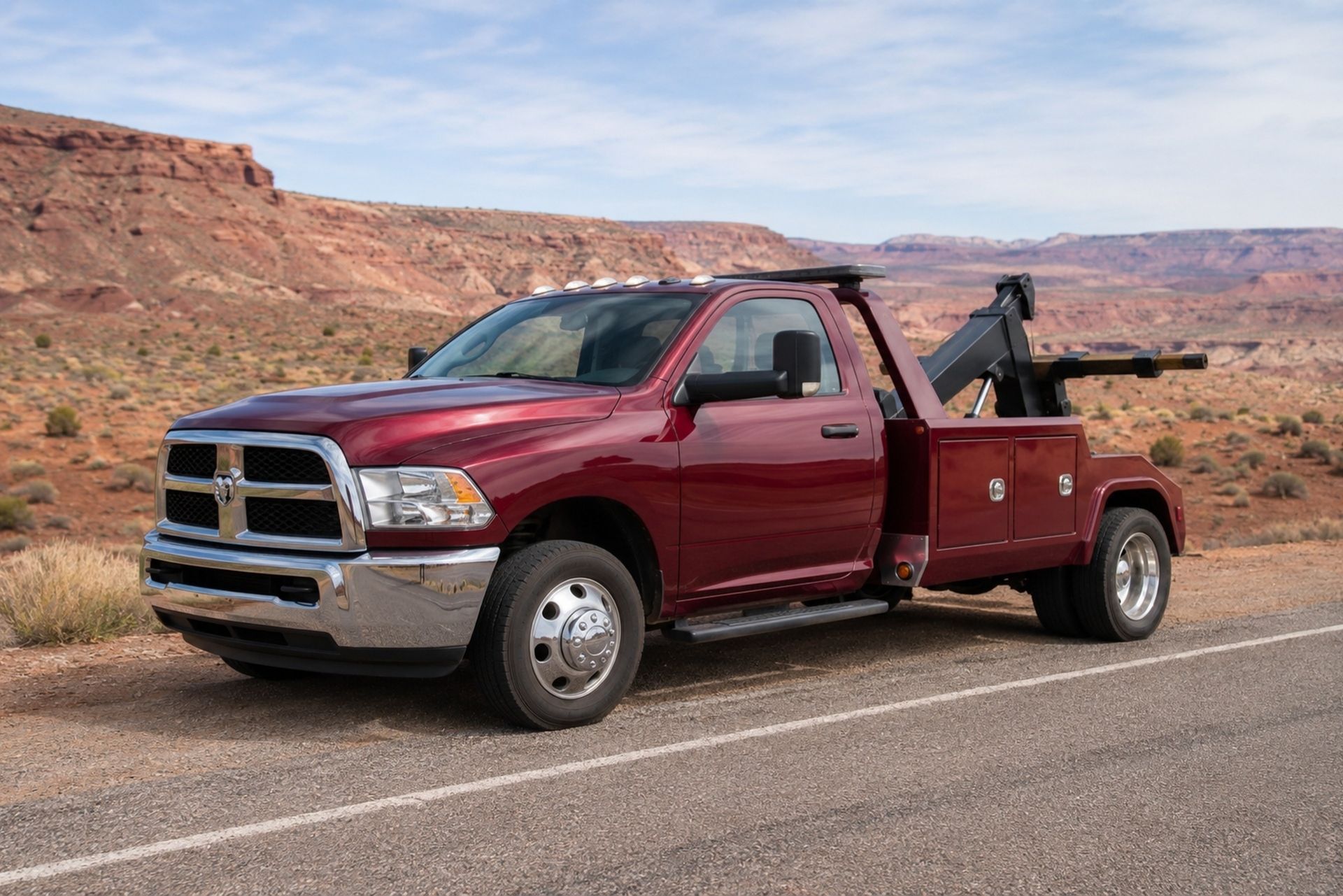
Two towing companies in the same city can pay wildly different premiums. The reasons come down to risk factors that insurers weigh heavily during underwriting.
Driver History and Experience Levels
Your drivers' MVRs (motor vehicle records) are the single biggest factor in your premium. A clean driving record across your team can save you 20% to 30% compared to a company with multiple at-fault accidents or violations. Insurers also look at experience: drivers with fewer than two years behind the wheel of a commercial vehicle are considered higher risk.
One common mistake we see is hiring a driver without pulling their MVR first. A single DUI or reckless driving charge in the past three years can spike your entire fleet's premium. Some carriers will decline to renew your policy altogether if your driver pool looks too risky.
Equipment Type and Operating Radius
A light-duty wheel-lift truck costs less to insure than a heavy-duty rotator. The logic is straightforward: heavier equipment means bigger potential claims. A rotator working highway recovery scenes faces far more exposure than a flatbed doing local repossessions.
Your operating radius matters too. A company that stays within a 30-mile radius of its yard pays less than one running long-distance tows across state lines. Interstate operations also trigger federal filing requirements (MCS-90 endorsements) that add cost and complexity. If you're hauling vehicles from Albuquerque to Dallas, your policy needs to reflect that exposure, and the
2026 Texas insurance market is pricing that risk aggressively.
Common Questions About Towing Coverage
Do I need separate policies for each state I operate in? Not necessarily. A single commercial auto policy can cover multi-state operations, but it must meet the highest minimum requirement among the states where you tow. Your declarations page should list all operating states.
Can I use personal auto insurance on my tow truck? No. Personal auto policies exclude commercial use entirely. If you file a claim while towing for hire, it will be denied, and you could face fines for operating without proper commercial coverage.
What happens if I'm underinsured during a highway accident? You're personally liable for anything above your policy limit. In Texas, where jury awards in trucking cases regularly exceed $1 million, this can mean losing your business, your equipment, and personal assets.
How often should I review my towing insurance policy? At least once a year, or whenever you add trucks, hire drivers, or expand into a new state. Premium audits at renewal can result in surprise bills if your payroll or revenue projections were off.
Is on-hook coverage required by law? Only Utah mandates it for UDOT rotation. But every motor club contract and most municipal agreements require it. Operating without on-hook coverage is a fast way to lose your best revenue sources.
Does my garagekeepers policy cover vehicles damaged in a flood? It depends on whether you carry comprehensive garagekeepers coverage or just collision. Comprehensive includes weather events, fire, and theft. Collision-only policies won't cover flood damage.
Making the Right Choice for Your Fleet
Picking the right tow truck insurance in NM, Utah, or Texas isn't just about meeting state minimums and moving on. It's about matching your coverage to the actual risks your business faces every day. A company running light-duty tows in suburban Provo has a completely different risk profile than a heavy-recovery outfit working I-10 outside Las Cruces.
Get quotes from at least three agents who specialize in towing and transportation. Ask specifically about their claims handling process and whether they have experience with towing-related disputes. A generalist agent who mostly writes homeowners policies won't understand on-hook endorsements or TDLR filing requirements.
Review your policy annually, pull driver MVRs before every hire, and don't let your coverage lag behind your growth. The cheapest policy is rarely the best one, and the cost of being underinsured is always higher than the premium you saved.
About The Author:
Dax Kastrin
As Founder and Agent at ERM Insurance, I’m committed to helping clients understand and manage risk through clear, straightforward coverage solutions. With professional designations as an Accredited Advisor in Insurance (AAI) and Associate in General Insurance (AINS), I focus on delivering dependable protection and personalized service for every individual and business I work with.
Your Business Insurance Solutions

Workers’ Compensation Insurance
Protect your workers from significant financial losses if they are injured or disabled while performing their duties as an employee.

Cyber Liability Insurance
Safeguard your business against financial losses from data breaches, especially those that involve sensitive customer information and other unforeseen cyber events, like cybercrime.

Directors & Officers Liability
Protect your C-suite officers and board members, as well as the companies they represent if they are the subject of a claim or investigation from their duties.

General Liability Insurance
Guard your business against the cost of claims that can be filed due to bodily injury to a third party, damage to third-party property, lawsuits, and more.

Business Owners Insurance
Reduce the cost of premiums by getting a business owner’s insurance, a coverage plan that combines commercial property insurance and general liability insurance.

Commercial Auto Insurance
Guard your business against financial losses from accidents involving company vehicles. Commercial auto insurance provides for bodily injury liability and property damage.

Commercial Property Insurance
Recover from financial losses involving damage to your physical assets, including furniture, physical building, office space, inventory, landscaping and fencing, signage, and more.

Lessor's Risk Insurance
Get coverage for your rental properties. A lessor’s risk insurance covers financial losses from acts of vandalism, litigation costs for lawsuits, theft of property owned by your tenants, and more.

Product Liability Insurance
Protect your companies from claims made against the goods you provide. This covers injuries caused by malfunctions of products, design defects, and more.
Choose Elemental Risk Management Today
Get a Plan Suited to Your Business
ERM assesses the risks that your company faces, as well as your industry, operations, workforce, and more.
Recover Quickly
With business insurance coverage, you’ll bounce back from adverse events that could have left your business on the brink of bankruptcy.
Avoid Overpaying
Through customized solutions, your business will get adequate coverage without unnecessary costs. We’ll keep premiums cost-effective.
Our Testimonials
Hear from our clients
“We recently changed our business insurance after over 20 years, and we couldn't be happier. We didn't realize how poor the service was, how unresponsive, and slow the service was of our previous carrier. Dax and his team have gone above and beyond to answer every question our business had, to ensure that we had the coverage we needed, and fully understood everything we were getting. Not only did we save money, but we have saved a lot of time with the quick responsiveness of this team. They are exceptional. Would Highly recommend, and provide references."
Laura Harrison
May 2021
"I love working with the ERM crew! They are always super inquisitive and willing to learn/ask questions to provide their clients with the best possible insurance solution. I would definitely recommend them to anyone looking for advice on their current policies and coverage."
Nicole Limpert
May 2021
“Elemental Risk Management has been our insurance agent for 2 years now. They are consistently shopping for us to have the very best quality of coverage, as well as the best rates available. They saved our company over $20,000.00 in premiums our first year doing business with them. They are also quick to respond to any need (COI's, accident reporting, etc.). I recommend the team at ERM very highly!
Ramona Mills
June 2021