Florida Mobile Home and RV Park Insurance
8:30am - 5:00pm Mon-Fri
Will Reply in 15min*
Over 180+ commercial clients covered
100% customer satisfaction guaranteed
Over 10 years of business insurance experience
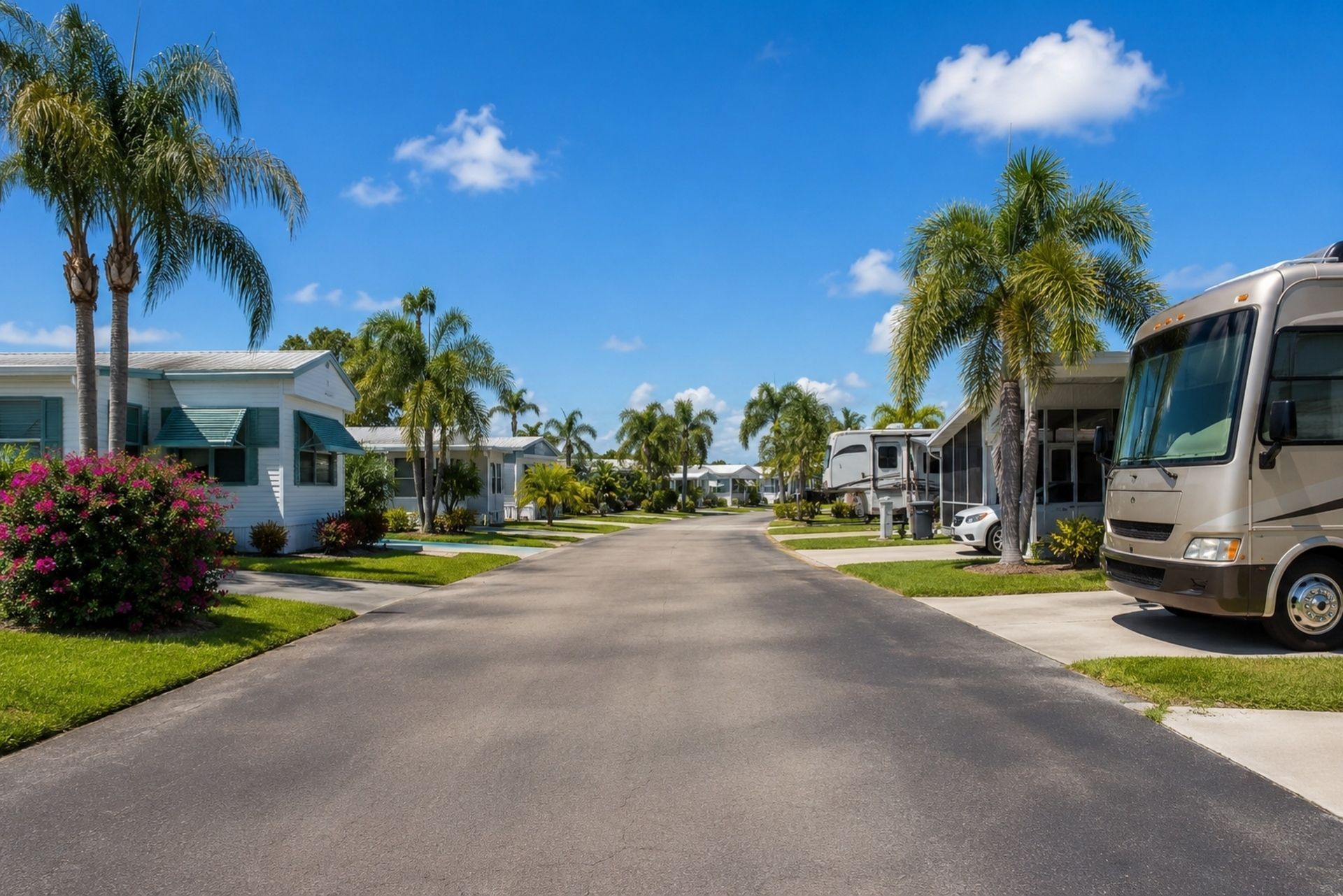
Owning a mobile home or RV park in Florida means dealing with a unique combination of weather exposure, liability risk, and regulatory requirements that most commercial property owners never face. Between hurricane season, aging infrastructure, and the sheer variety of amenities many parks offer, your insurance needs are far more complex than a standard commercial policy can handle. Annual premiums for mobile homes in southwest Florida have
climbed to roughly $5,000 per unit, sometimes exceeding what traditional single-family homeowners pay. That figure alone should tell you how seriously insurers view the risks involved. This guide to Florida mobile home and RV park insurance coverage breaks down the essential policies, Florida-specific hazards, and practical strategies you need to protect your investment. Whether you own a 30-pad RV park near the coast or a 200-unit manufactured home community inland, understanding your coverage options is the difference between surviving a bad year and losing everything.
Essential Insurance Components for Florida Park Owners
Running a mobile home or RV park means juggling multiple insurance policies that work together to cover your property, your tenants, and your business income. No single policy handles everything, and gaps between coverages are where most owners get burned.
General Liability and Premise Coverage
General liability is the foundation of any park owner's insurance program. It covers bodily injury and property damage claims from third parties, whether that's a visitor tripping on a cracked sidewalk or a tree limb falling on a tenant's vehicle. Most Florida parks carry at least $1 million per occurrence with a $2 million aggregate, though parks with higher foot traffic or more amenities often need higher limits.
Premise liability, which is typically bundled into your general liability policy, specifically addresses hazards on your property. Think about the common areas: roads, laundry facilities, mail kiosks, and walkways. If someone is injured in any of these spaces, your premise coverage responds first. One mistake we see frequently is park owners assuming their general liability covers everything on the property, including tenant-owned structures. It doesn't. Your policy covers common areas and park-owned infrastructure, not individual homes unless you own them.
Commercial Property and Infrastructure Protection
Your commercial property policy covers the physical assets you own: office buildings, maintenance sheds, utility systems, signage, and any park-owned homes or RVs. The key here is getting your valuations right. Underinsuring your water and sewer infrastructure is one of the most common and costly mistakes in this industry. Replacing a park-wide water system can run $500,000 or more, and if your policy only covers $200,000, you're eating the rest.
Florida's Department of Financial Services oversees insurance regulation in the state, and they require insurers to clearly disclose what's covered and what's excluded. Make sure your policy explicitly lists underground utilities, electrical distribution systems, and any permanent structures. If it's not named, it's probably not covered.
Business Interruption and Loss of Income
A hurricane doesn't just damage buildings. It empties your park for weeks or months. Business interruption insurance replaces the rental income you lose while your property is being repaired. For a 100-unit park collecting $600 per month per lot, that's $60,000 in monthly revenue at risk.
Most policies have a waiting period of 48 to 72 hours before coverage kicks in, and they'll pay out for a defined restoration period, typically 12 months. Pay close attention to the "period of restoration" language in your policy. Some insurers define it as the time needed to physically rebuild, while others extend it until occupancy returns to pre-loss levels. That distinction can mean tens of thousands of dollars.

By: Dax Kastrin
Founder and Agent at ERM Insurance
Florida's geography puts mobile home and RV parks squarely in the path of hurricanes, tropical storms, and flooding. Your insurance program needs to account for all three, and they're often covered by separate policies or endorsements.
Hurricane and Windstorm Deductibles
Here's where Florida park insurance gets expensive and confusing. Most commercial property policies in Florida carry a separate hurricane or named-storm deductible, typically expressed as a percentage of the insured value rather than a flat dollar amount. A 5% hurricane deductible on a property insured for $2 million means you're responsible for the first $100,000 of wind damage.
Some carriers offer 2% deductibles at a higher premium, while others won't go below 5% for coastal properties. Florida statute
requires insurers to offer multiple deductible options, but the pricing difference between a 2% and a 10% deductible can be dramatic. Run the numbers carefully. A lower deductible costs more in annual premium, but it could save you six figures after a major storm.
Flood Insurance and FEMA Requirements
Wind and flood are two separate perils in Florida, and standard commercial property policies exclude flood damage entirely. You'll need a separate flood policy, either through FEMA's National Flood Insurance Program or a private flood carrier.
If any part of your park sits in a Special Flood Hazard Area, your lender will require flood insurance. But even parks outside high-risk zones should carry it. Nearly
25% of all flood claims come from properties outside designated flood zones, and Florida's flat terrain and high water table make inland flooding a real threat. NFIP commercial policies max out at $500,000 for building coverage, which isn't enough for most parks. Private flood carriers can offer higher limits, sometimes up to $10 million, with more flexible terms.
Specialized Liability for Park Amenities
The amenities that make your park attractive to tenants also create specific liability exposures that need dedicated coverage.
Pool, Clubhouse, and Recreational Area Safety
Swimming pools are the single biggest liability magnet in any residential park. Drowning and near-drowning incidents generate some of the largest personal injury claims in the industry. Your general liability policy covers pool injuries, but your insurer will want to see that you're meeting Florida's pool safety requirements: proper fencing, self-closing gates, depth markers, and posted rules.
Clubhouses, fitness rooms, playgrounds, and fishing ponds each carry their own risk profile. A playground with outdated equipment that doesn't meet current ASTM safety standards is a lawsuit waiting to happen. Document your maintenance schedule, keep inspection records, and photograph any repairs. These records become your best defense if a claim is filed.
Management Liability and Fair Housing Coverage
Park owners face a category of risk that has nothing to do with weather or physical injuries. Fair housing complaints, wrongful eviction claims, and discrimination allegations fall under management liability, and they're increasingly common.
Florida's mobile home tenancy laws under
Chapter 723 of the Florida Statutes give tenants specific rights regarding lot rental increases, eviction procedures, and park rule changes. Violating these provisions, even unintentionally, can trigger legal action. An Employment Practices Liability Insurance policy or a management liability endorsement covers defense costs and settlements related to these claims. If you employ staff, EPLI also covers wrongful termination, harassment, and discrimination claims from employees.
Understanding what drives your premium helps you make smarter decisions about property improvements and policy structure.
Impact of Park Age and Infrastructure Updates
Insurers look closely at the age of your park's infrastructure, especially roofing, electrical systems, plumbing, and roads. A park built in the 1970s with original aluminum wiring and galvanized pipes is a much higher risk than one that's been systematically updated.
| Factor | Lower Premium Impact | Higher Premium Impact |
|---|---|---|
| Roof age | Under 10 years, metal or concrete tile | Over 20 years, asphalt shingle |
| Electrical | Updated to current code | Original aluminum wiring |
| Plumbing | PVC or copper replacement | Galvanized or polybutylene |
| Wind mitigation | Hurricane straps, impact windows | No wind mitigation features |
| Distance to coast | Over 10 miles inland | Within 5 miles of coast |
Investing in infrastructure upgrades pays for itself through lower premiums over time. Many insurers offer credits of 10% to 25% for documented wind mitigation features and updated electrical and plumbing systems.
Tenant vs. Park-Owned Home Ratios
The mix of tenant-owned and park-owned homes in your community directly affects your insurance costs. When tenants own their homes, they're responsible for insuring the structures themselves. Your policy only needs to cover common areas and park infrastructure.
Parks where the owner also owns the homes carry significantly higher property insurance costs because every unit is on your policy. If you're transitioning from a park-owned model to a tenant-owned model, update your insurer annually so your premiums reflect the current ratio. We've seen owners overpay by thousands per year simply because they didn't report that they'd sold off units.
Best Practices for Claims Management and Annual Reviews
Filing a claim correctly is just as important as having the right policy. After any significant weather event, document damage immediately with photos, video, and written descriptions. Don't start permanent repairs until your adjuster has inspected the property, but do make temporary repairs to prevent further damage, and keep every receipt.
Schedule a formal insurance review at least once a year, ideally 90 days before your renewal date. This gives you time to shop competing quotes if your current carrier's pricing has jumped. During your review, update your property valuations, report any new construction or demolition, and verify that your liability limits still match your exposure. A park that added a dog park and pickleball courts since last renewal has a different risk profile than what's currently on the policy.
Keep a claims log that tracks every incident on your property, even ones that don't result in a formal claim. This log helps you identify patterns, like repeated slip-and-fall incidents in the same location, so you can fix the underlying problem before it becomes an expensive claim trend.
Frequently Asked Questions
Do my tenants need their own insurance if they own their mobile homes? Yes. Your park policy covers common areas and park-owned structures, not tenant-owned homes. Most park owners require tenants to carry their own homeowners or renters policy as a condition of the lease.
Is flood insurance required for all Florida mobile home parks? Only if your property is in a FEMA-designated Special Flood Hazard Area and you have a federally backed mortgage. That said, flood coverage is strongly recommended for every Florida park regardless of zone designation.
Can I bundle all my park coverages into one policy? Many insurers offer a Business Owners Policy that combines property, general liability, and business interruption. Flood and wind coverage are usually separate policies in Florida.
How often should I update my property valuations? At least annually. Construction costs in Florida have risen sharply, and an outdated valuation means you'll be underinsured if you need to rebuild.
What's the difference between actual cash value and replacement cost coverage? Actual cash value deducts depreciation, so you'd receive less for older structures. Replacement cost pays what it actually costs to rebuild or replace, regardless of age. Always choose replacement cost if it's available for your property type.
Getting the right insurance coverage for a Florida mobile home or RV park isn't a one-time decision. It's an ongoing process that changes as your property evolves, weather patterns shift, and Florida's regulatory environment updates. Start by requesting a detailed coverage review from a broker who specializes in manufactured housing communities. Bring your current policies, a property inventory, and a list of any improvements you've made in the past year. Compare at least three quotes, and don't just look at premium price. Compare deductibles, exclusions, and coverage limits side by side. The cheapest policy is rarely the best value when a Category 4 hurricane makes landfall. Your park is likely your largest asset, so treat its insurance program with the same seriousness you'd give any major business decision.
About The Author:
Dax Kastrin
As Founder and Agent at ERM Insurance, I’m committed to helping clients understand and manage risk through clear, straightforward coverage solutions. With professional designations as an Accredited Advisor in Insurance (AAI) and Associate in General Insurance (AINS), I focus on delivering dependable protection and personalized service for every individual and business I work with.
Your Business Insurance Solutions

Workers’ Compensation Insurance
Protect your workers from significant financial losses if they are injured or disabled while performing their duties as an employee.

Cyber Liability Insurance
Safeguard your business against financial losses from data breaches, especially those that involve sensitive customer information and other unforeseen cyber events, like cybercrime.

Directors & Officers Liability
Protect your C-suite officers and board members, as well as the companies they represent if they are the subject of a claim or investigation from their duties.

General Liability Insurance
Guard your business against the cost of claims that can be filed due to bodily injury to a third party, damage to third-party property, lawsuits, and more.

Business Owners Insurance
Reduce the cost of premiums by getting a business owner’s insurance, a coverage plan that combines commercial property insurance and general liability insurance.

Commercial Auto Insurance
Guard your business against financial losses from accidents involving company vehicles. Commercial auto insurance provides for bodily injury liability and property damage.

Commercial Property Insurance
Recover from financial losses involving damage to your physical assets, including furniture, physical building, office space, inventory, landscaping and fencing, signage, and more.
Lessor's Risk Insurance
Get coverage for your rental properties. A lessor’s risk insurance covers financial losses from acts of vandalism, litigation costs for lawsuits, theft of property owned by your tenants, and more.

Product Liability Insurance
Protect your companies from claims made against the goods you provide. This covers injuries caused by malfunctions of products, design defects, and more.
Choose Elemental Risk Management Today
Get a Plan Suited to Your Business
ERM assesses the risks that your company faces, as well as your industry, operations, workforce, and more.
Recover Quickly
With business insurance coverage, you’ll bounce back from adverse events that could have left your business on the brink of bankruptcy.
Avoid Overpaying
Through customized solutions, your business will get adequate coverage without unnecessary costs. We’ll keep premiums cost-effective.
Our Testimonials
Hear from our clients
“We recently changed our business insurance after over 20 years, and we couldn't be happier. We didn't realize how poor the service was, how unresponsive, and slow the service was of our previous carrier. Dax and his team have gone above and beyond to answer every question our business had, to ensure that we had the coverage we needed, and fully understood everything we were getting. Not only did we save money, but we have saved a lot of time with the quick responsiveness of this team. They are exceptional. Would Highly recommend, and provide references."
Laura Harrison
May 2021
"I love working with the ERM crew! They are always super inquisitive and willing to learn/ask questions to provide their clients with the best possible insurance solution. I would definitely recommend them to anyone looking for advice on their current policies and coverage."
Nicole Limpert
May 2021
“Elemental Risk Management has been our insurance agent for 2 years now. They are consistently shopping for us to have the very best quality of coverage, as well as the best rates available. They saved our company over $20,000.00 in premiums our first year doing business with them. They are also quick to respond to any need (COI's, accident reporting, etc.). I recommend the team at ERM very highly!
Ramona Mills
June 2021